

Views: 0 Author: Site Editor Publish Time: 2026-08-04 Origin: Site


Upgrading feeding equipment requires a substantial capital expenditure. Mismatching machinery to your primary forage type leads to costly hidden losses. You will likely face excessive processing times, poor feed conversion, and accelerated equipment wear. Operations frequently transition to high-roughage diets to lower feed expenses. Many farms also prefer processing intact bales directly. A standard-capacity mixer quickly becomes a major operational bottleneck during these transitions. Forcing bulky roughage into undersized equipment drastically limits overall farm throughput. This guide breaks down exactly which specific forage characteristics demand a large tub setup. We will explore how you evaluate capacity needs against daily operational constraints. You will learn what mechanical and facility limits to verify before shortlisting a heavy-duty Trailed TMR Mixer. Our goal is to help you maintain optimal ration uniformity. You will gain actionable insights to make a highly informed equipment decision.
Forcing bulky forages into a structurally inadequate tub creates severe problems. It hurts your daily bottom line through mechanical strain and nutritional deficits. When you overfill a small unit, the feed simply stops moving properly. This lack of movement creates dangerous "dead spots" within the chamber. Feed sits entirely undisturbed in these isolated zones. Poor mix uniformity encourages aggressive herd sorting behavior. Cattle easily pick out the tasty concentrates. They leave the essential long-stem roughage behind in the bunk. This directly drops their daily dry matter intake. Consequently, milk and beef yields suffer noticeably over time. Rumen health also declines sharply when fiber intake fluctuates.
Mechanical wear accelerates exponentially under these overloaded conditions. Your planetary drives endure massive stress spikes. PTO shafts twist and degrade faster when pushing beyond rated limits. Auger knives dull rapidly when they struggle against compacted long-stem materials. Every dull knife further slows down your daily processing speed. You also face a massive drain on daily labor and fuel. Operators must run multiple smaller batches to feed the same herd. They spend excessive idling time waiting for the right "scratch factor." Running a tractor an extra two hours daily burns significant diesel fuel. It also adds unnecessary hours to the tractor engine. You increase your maintenance intervals unnecessarily. An undersized unit essentially penalizes you every single day. Consider the hidden operational penalty of shear bolt failures. An undersized mixer processing heavy hay will routinely break shear bolts. Every broken bolt stops feeding operations entirely. The operator must exit the tractor, clear the jam manually, and replace the hardware. This wastes valuable labor minutes. It disrupts the precise feeding schedules dairy cows rely upon for peak production.
You must match tub volume to the physical characteristics of your feedstuffs. Here are four specific raw materials requiring heavy-duty capacity.
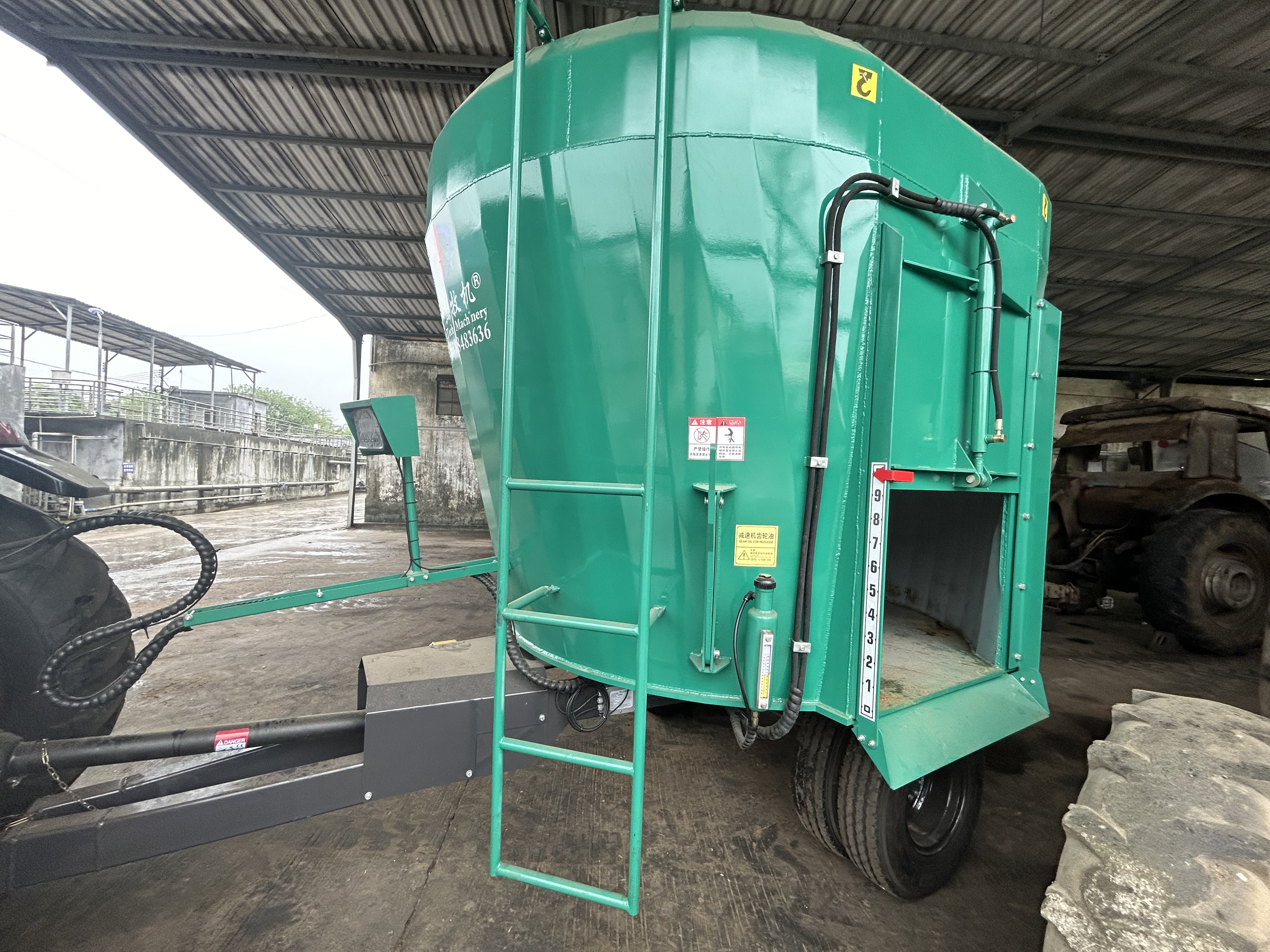
Not all large tubs perform equally under pressure. You must evaluate internal configurations closely. Twin-auger designs generally outshine single-auger models for high-roughage diets. A dual-auger setup moves material in a rapid figure-eight pattern. This continuous flow prevents heavy bales from stalling the machine.
Auger Configuration Comparison
| Feature | Single-Auger Design | Twin-Auger Design |
|---|---|---|
| Material Flow | Circular, single vortex movement | Figure-eight, overlapping movement |
| Bale Processing | Slower, prone to minor bridging | Highly aggressive, fast breakdown |
| Volume Capacity | Typically limited to medium sizes | Scales easily to massive volumes |
You need specific components engineered for bale breakdown. Serrated knives slice through dense stems much faster than smooth blades. Kicker plates help push material upward to keep the mix tumbling actively. You also need aggressive auger flighting to grab and tear intact bales. A well-designed heavy-duty TMR Mixer features reinforced leading edges on the auger to survive daily impacts.
The physical shape of the tub dictates feeding success. Steeper sidewall angles and wider tub bodies directly prevent "bridging." Bridging happens when long-stem hay sits uselessly on top of the auger. The auger spins beneath it, but no mixing occurs. A wider tub allows the bale to drop fully into the cutting path.
Always verify true working capacity. A specification sheet might list a total mixing volume in cubic feet. However, your working capacity is typically only 70% to 80% of that total volume for long hay. If your ration requires 500 cubic feet of space, you must buy a tub rated closer to 700 cubic feet. Failing to maintain this buffer causes significant spillage.
Buying a massive mixing unit introduces new operational challenges. You must mitigate these risks before taking delivery of your new equipment.
You cannot ignore strict horsepower minimums. Shearing a dense round bale requires massive, immediate power from your tractor. If your tractor lacks sufficient PTO horsepower, the large tub will easily stall. This stalling damages the PTO shaft and burns the tractor clutch. Always match the tractor output to the peak torque demand of the mixer. You must look beyond standard running horsepower. Ask the manufacturer for the peak horsepower required during the initial bale breakdown phase. Upgrading your mixer might force you to upgrade your tractor simultaneously.
You must map out your physical footprint realities. Large capacity machines take up significant space. Verify these specific measurements before making a purchase:
Even the largest tub will fail if you load it incorrectly. Operational success depends entirely on your loading order. You must add long-stem dry matter first. Let the machine cut these stems down to a manageable size. Next, introduce your wet or heavy ingredients like silage and baleage. Finally, add your concentrates, vitamins, and minerals. This specific sequence ensures thorough distribution. It prevents heavy wet feed from pinning down dry bales and stalling the auger.
Follow a systematic approach to shortlisting the right equipment size. Guessing your required capacity leads to expensive mistakes.
A: Premium large mixers feature aggressive augers and serrated knives capable of processing intact bales directly. This often eliminates the need for standalone tub grinders. However, you must accept that direct processing inside the mixer increases your total batch mixing time.
A: Processing dense round bales creates massive initial torque spikes. You generally need 20% to 30% more PTO horsepower than standard silage mixing requires. Always consult the manufacturer guidelines to ensure your tractor can handle this peak load without stalling.
A: Large tubs struggle with very small batches. The augers cannot effectively engage minimal material. Twin-auger systems handle low-volume batches slightly better than single-auger models. You must look for specialized sweeper arm designs to improve small batch cleanout and uniformity.
A: Yes, overmixing pulverizes the effective fiber in your ration. Large tubs with aggressive knives cut materials rapidly. If you do not recalibrate your mixing times, you will destroy the necessary "scratch factor" required for healthy rumen function.


