

Views: 0 Author: Site Editor Publish Time: 2026-07-27 Origin: Site


A TMR Mixer is a high-capital investment. It directly dictates feed conversion efficiency, herd health, and daily labor costs. It serves as the mechanical heart of your feeding program. When this machine fails to deliver a consistent ration, you immediately see drops in milk yield and daily weight gains.
At the decision stage, evaluating mixers goes far beyond basic volume specifications. It requires matching mechanical processing capabilities with your farm’s specific forage characteristics. You must also account for facility constraints and your existing tractor fleet. Choosing the wrong setup creates severe bottlenecks and accelerates equipment wear.
This guide breaks down the technical criteria for evaluating these critical machines. We cut through marketing claims to focus entirely on operational realities. You will learn how to assess maintenance durability and identify implementation risks. By following these steps, you can confidently match the right mixer to your herd.
You must establish baseline parameters before comparing machinery brands. The ideal mixer must align perfectly with your daily realities. We highly recommend starting your evaluation process here.
Define the physical characteristics of your feed. Rations vary wildly from farm to farm. Note the exact ratio of dry, long-stem hay to heavy, wet silage. Dense byproducts also change mixing dynamics. Fluffy materials require different processing actions compared to sticky, wet ingredients. Document your toughest, most difficult-to-blend ingredients. They will dictate the mechanical force you need.
Do not buy a mixer your tractor cannot power. Calculate the required PTO horsepower and hydraulic output. You must ensure your existing fleet handles the mixer under maximum load. Startup torque is heavily demanding. If you engage the PTO when the tub is fully loaded, weak tractors will stall. Factor in a 15% horsepower safety buffer above the manufacturer's minimum recommendation.
A high-capacity machine is completely useless if it cannot physically navigate your feeding route. Grab a tape measure and evaluate your entire feed path. You should measure the following:
Your loader and mixer must work together flawlessly. Ensure the mixer’s loading height aligns with your current equipment. Check the maximum reach and dump clearance of your telehandler or skid steer. If the bucket cannot cleanly clear the mixer wall, you risk damaging the tub. You also risk spilling valuable feed during every single batch.
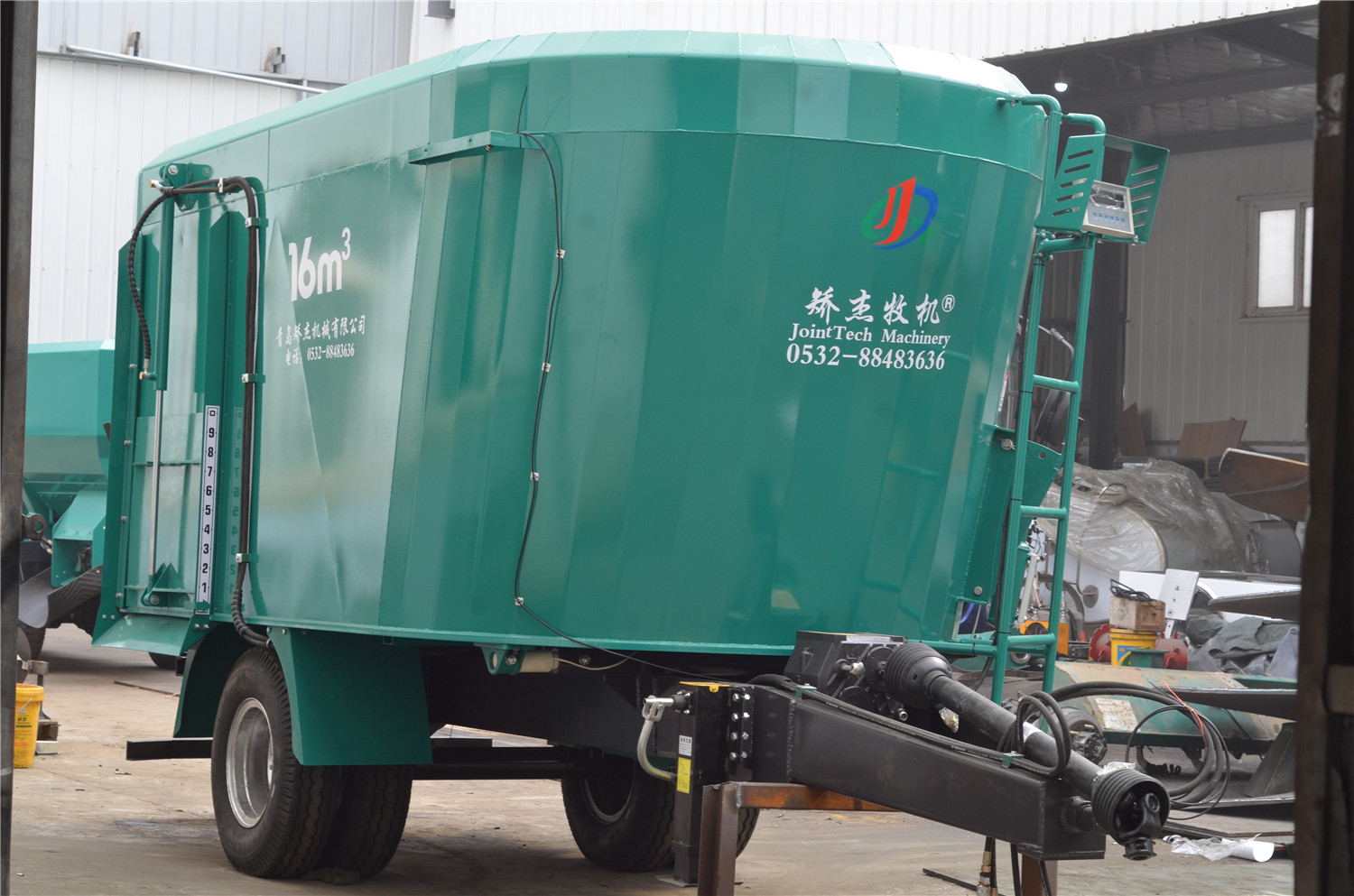
Engineers design mixers using three primary mechanical concepts. Each type offers distinct advantages. They also carry unique operational drawbacks. Understanding these differences prevents buyer's remorse.
This design utilizes one or more vertical augers equipped with cutting knives. The augers draw feed upward. The material then falls down the sides, creating a continuous volcano-like flow.
These machines use multiple horizontal augers. They usually feature three or four shafts. They churn and move feed aggressively from end to end.
A reel mixer employs a large rotating reel featuring sweeps and blending augers. The sweeps lift the feed and tumble it gently.
| Mixer Configuration | Primary Action | Best Suited For | Major Limitation |
|---|---|---|---|
| Vertical | Lifting and cutting via upright augers | Unprocessed round/square bales | Tall height restricts barn access |
| Horizontal | End-to-end churning via lateral augers | Finely chopped, dense silage | High risk of hay wrapping |
| Reel | Gentle tumbling via rotating sweeps | Delicate, flaked ingredients | High moving-part maintenance |
Buying the correct size prevents daily headaches. An undersized machine forces you to mix extra batches. An oversized machine wastes power and reduces mix quality. Follow strict calculation rules to find your sweet spot.
Determine your required cubic feet or liters accurately. This depends entirely on your herd size and intake per head. Dairy cows consume different volumes than beef cattle. You must also determine the number of desired feeding groups per day. Use these steps:
Never fill a mixer to the absolute brim. You must factor in a 15-20% dead space buffer. We call this the 80% rule. Overfilling degrades mix consistency drastically. It leads to cow sorting at the bunk. It also accelerates wear on the drivetrain because the feed cannot circulate. When feed bridges at the top, the bottom material turns to mush.
Always distinguish between weight capacity and volume capacity. Fluffy, dry hay takes up significantly more volume per pound than wet corn silage. If your ration includes 40% dry hay, a 600-cubic-foot mixer holds far less total weight than it would with a 100% silage ration. Calculate your volume based on your fluffiest, lightest ingredients.
Project your herd growth over the next five to seven years. Size up slightly to accommodate future expansion. However, avoid over-sizing drastically. Running a machine half-empty negatively affects mix quality. A vertical auger needs a certain volume of feed to create proper tumbling friction.
The physical mobility of your equipment dictates your daily workflow. You must decide how feed moves from the commodity bay to the animals.
A Trailed TMR Mixer remains the standard for most commercial dairies and beef operations. You hitch it directly to a tractor and drive it.
These units bolt securely to a concrete pad. They sit permanently inside centralized feed centers or work alongside automated feeding systems.
These are all-in-one driving machines. They feature an integrated milling head, a mixing tub, and an operator cab.
Machinery operates in highly corrosive and abrasive environments. Assessing wear parts before purchasing saves severe operational headaches later. Focus purely on mechanical resilience and uptime.
Scrutinize the tub walls, auger flighting, and kicker plates. Acidic silage eats through cheap steel quickly. Look specifically for abrasion-resistant steel. AR200 or AR400 steel grades provide superior longevity. Some manufacturers offer stainless steel liners. These liners resist acidic corrosion beautifully. Thicker steel always translates to fewer weld patches over a decade of use.
Compare planetary gearboxes against traditional chain and sprocket drives. Gearboxes typically offer much longer lifespans. They require lower daily maintenance, mostly just fluid checks. Chains require constant tensioning and lubrication. If a chain snaps during a mix, your entire feeding schedule stops. Robust gearboxes handle shock loads much better.
Assess the availability and ease of replacement for auger knives. You will replace knives frequently. Dull knives drastically increase fuel consumption. They also extend mixing time, turning a 15-minute chore into a 30-minute grind. Check if the knives use standard bolt patterns. Proprietary knives often cause frustrating sourcing delays.
Evaluate the onboard weighing system carefully. Standard digital indicators are cheap and reliable. However, cloud-connected scales reduce human error. They integrate seamlessly with farm management software. This integration stops employees from overfeeding expensive minerals. Accurate load cells prevent ration shrink and keep your ingredient inventory highly accurate.
Once you narrow down the technical specifications, evaluate the brand and dealer. The best machine fails if you cannot get parts on a Sunday morning.
Do not purchase a unit without local dealer support. Downtime immediately impacts milk and meat production. If a bearing shatters, you need a replacement that same day. Assess the dealer's parts inventory. Ask them directly how many mechanics they employ. Proximity guarantees your herd gets fed when unexpected breakdowns occur.
Insist on testing the machine right on your property. Use your toughest actual feed ingredients. Throw in your tightest, wettest round bales. See how the tractor handles the PTO load. Observe the mix consistency firsthand. A machine that works perfectly on a glossy brochure might struggle with your specific forage.
Review the warranty coverage extensively. Look past the chassis. Focus specifically on high-stress components. Check the coverage terms for gearboxes, scale load cells, and auger flighting. A robust warranty on the planetary gearbox indicates the manufacturer trusts their engineering. Ensure you understand what actions might void the agreement.
Finalize your choice by projecting operational improvements. Calculate the expected reduction in daily mixing time. Estimate the potential improvements in feed conversion rates due to better mix consistency. A uniform ration stops cows from sorting. When cows eat exactly what the nutritionist formulated, herd health stabilizes quickly.
Selecting the right feeding equipment requires balancing your specific forage processing needs against existing farm infrastructure. You must accurately evaluate tractor power, barn dimensions, and daily feed volumes. The right choice optimizes feed consistency while minimizing daily maintenance downtime.
Take actionable steps before contacting a salesperson. Map out your required volumetric capacity accurately. Measure your barn doors and feed alleys. Verify your tractor’s exact PTO specifications. Once you gather these numbers, contact localized dealers to arrange real-world demonstrations on your property.
Ready to streamline your feeding program? Contact our equipment specialists today to match the perfect mixer to your herd's unique nutritional demands.
A: It depends heavily on mixer size and feed density. Requirements typically range from 60 HP for small, single-auger units up to 150+ HP for heavy, twin-auger models processing wet bales.
A: Yes, vertical mixers are specifically designed to process whole round and square bales. This works seamlessly provided the auger features aggressive, sharp knives and the tractor supplies sufficient PTO power.
A: They usually last 7 to 10 years. This depends on daily operating hours, feed acidity, and maintenance rigor. Tub liners and auger flighting often need replacement or rebuilding at the 4-5 year mark.
A: Dead spots are often a direct result of overfilling past 80% capacity. They also occur due to worn auger kicker plates, extremely dull cutting knives, or following an incorrect ingredient loading sequence.


