

Views: 0 Author: Site Editor Publish Time: 2025-11-19 Origin: Site


Feeding livestock has always been one of the most critical tasks in animal husbandry. For sheep farmers, ensuring that their flocks receive the right amount of nutrition at the right time directly influences productivity, health, and profitability. As farms continue to modernize, the adoption of specialized equipment such as the feed spreader has become increasingly vital. Feed spreaders are not just simple distribution tools—they play a central role in transforming traditional sheep feeding systems into efficient, sustainable, and welfare-oriented operations.
This article explores the role of feed spreaders in modern sheep feeding, their benefits, integration strategies, and future prospects in agriculture.
A feed spreader is a machine designed to evenly distribute feed across a designated area or into feeding troughs. While they come in various designs, their purpose remains the same: to deliver feed efficiently and consistently to livestock. In sheep farming, where flock sizes can range from a few dozen to several thousand, feed spreaders ensure that all animals have equal access to nutrition.
Unlike manual feeding, which is labor-intensive and time-consuming, feed spreaders mechanize the process, reducing the burden on farmers while enhancing precision.
Traditionally, sheep feeding involved manual labor—farm workers carrying buckets of feed, distributing it by hand, or using rudimentary carts. While effective for small flocks, this method quickly became unsustainable for larger farms.
The rise of mechanized systems, including feed spreaders, changed the landscape of sheep husbandry. By automating feed distribution, farmers reduced workloads, improved consistency, and optimized feed usage. This shift has been especially important for farms seeking scalability and profitability in a competitive agricultural environment.
The integration of feed spreaders into modern sheep feeding systems delivers a wide range of benefits that extend beyond convenience. These machines optimize daily operations, promote animal welfare, and support the long-term sustainability of sheep farming.
a Improved Efficiency
One of the most obvious benefits is efficiency. Feed spreaders dramatically reduce the time and physical labor needed to feed large flocks. Tasks that once consumed hours of manual effort can now be completed in minutes. This allows farmers to reallocate valuable resources to other important areas such as animal health monitoring, breeding management, or pasture maintenance.
b Even Distribution of Feed
Uneven feed distribution often creates competition within the flock. Dominant sheep may consume more than their fair share, leaving weaker animals undernourished. By ensuring uniform feed delivery, feed spreaders promote fair access, reduce aggressive behavior, and foster a calmer, healthier flock environment.
c Enhanced Animal Health and Productivity
Balanced feeding directly impacts sheep health. With consistent access to the right amount of feed, sheep maintain stronger immune systems, achieve steady weight gain, and produce higher-quality wool and meat. Over time, this contributes to improved farm productivity and profitability.
d Reduced Feed Waste
Manual feeding often leads to overfeeding or spillage, wasting valuable resources. Feed spreaders dispense precise amounts, minimizing losses and lowering feed costs. This not only improves farm economics but also reduces the environmental footprint of sheep farming.
e Labor Savings
Automation reduces reliance on manual labor, which is crucial in regions facing agricultural workforce shortages. Farmers can effectively manage larger flocks with fewer workers, enhancing operational sustainability and resilience.
f Cost-Effectiveness
Although the upfront cost of a feed spreader can seem significant, the long-term benefits—lower labor expenses, reduced feed waste, and healthier, more productive sheep—make it a highly cost-effective investment for modern sheep farms.
In summary, feed spreaders are more than tools for convenience; they are strategic assets that improve efficiency, animal welfare, and overall farm profitability.
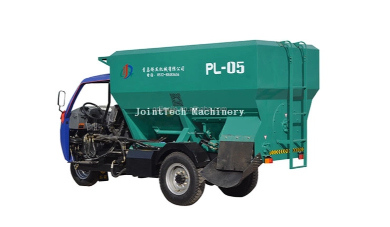
Feed spreaders come in several types, each suited for specific farm needs:
Trailer-Mounted Feed Spreaders – Pulled by tractors or ATVs, these are ideal for medium to large-scale farms requiring quick distribution over wide areas.
Self-Propelled Feed Spreaders – Equipped with their own engines, these machines offer flexibility and independence from other vehicles.
Stationary Feed Spreaders – Often integrated into automated feeding systems, these are used in enclosed barns or intensive sheep farming setups.
Hand-Push or Small Feed Spreaders – Lightweight versions suitable for small farms or supplementary feeding tasks.
Choosing the right type depends on factors such as flock size, feeding frequency, and farm layout.
Simply purchasing a feed spreader is not enough; integration into farm workflow is essential to maximize benefits. Successful integration involves:
Pre-Planning Feed Rations – Determining the correct feed mix and quantities before spreading ensures nutritional requirements are met.
Regular Maintenance – Keeping blades sharp, hoppers clean, and mechanical parts well-lubricated extends machine lifespan and ensures consistent performance.
Operator Training – Skilled operators can adjust settings, troubleshoot minor issues, and operate safely, maximizing machine efficiency.
Workflow Coordination – Aligning feeding schedules with grazing rotations or lambing cycles ensures sheep nutrition aligns with growth and reproduction needs.
Modern sheep farming prioritizes not just productivity but also animal welfare. Feed spreaders contribute significantly to this goal:
Reduced Stress – Uniform feed distribution minimizes competition and aggression among sheep.
Better Nutrition Access – Smaller or weaker animals have equal access, reducing malnutrition.
Clean Feeding Practices – Many feed spreaders are designed to reduce contamination by keeping feed off the ground, lowering the risk of disease transmission.
By improving both welfare and productivity, feed spreaders support the ethical and economic sustainability of sheep farms.
Economic Benefits
Lower feed costs due to minimized waste.
Reduced labor expenses.
Increased flock productivity leading to higher returns on wool, meat, or milk.
Environmental Benefits
Precision feeding prevents overuse of feed, reducing pressure on natural resources.
Lower energy use compared to manual feeding methods over time.
Sustainable feeding practices align with modern agricultural regulations and consumer expectations.
The future of feed spreaders lies in automation and smart technology. Emerging trends include:
IoT-Enabled Feed Spreaders – Connected devices that monitor feed levels, distribution patterns, and flock consumption in real-time.
GPS Integration – Precision spreading based on mapped pastures or barn layouts.
AI-Driven Feeding Systems – Artificial intelligence could adjust feeding schedules and amounts based on animal growth rates and health data.
Eco-Friendly Designs – Manufacturers are increasingly focusing on energy-efficient machines made with sustainable materials.
These innovations will further enhance efficiency, reduce costs, and align sheep farming with the demands of a digital agricultural era.
Feed spreaders have revolutionized sheep feeding systems by improving efficiency, ensuring even feed distribution, enhancing animal welfare, and reducing waste. They represent a vital tool for modern sheep farms looking to remain competitive, sustainable, and welfare-oriented.
As farms continue to evolve, integrating advanced feed spreaders into their operations will become not just an option, but a necessity. With technology advancing rapidly, the next generation of feed spreaders promises even greater productivity and sustainability.
For farmers interested in upgrading their feeding systems with reliable and innovative equipment, exploring professional providers is essential. To learn more about high-quality feed spreaders and farm machinery solutions, you can visit www.jmachinery.com—a trusted source for modern agricultural equipment that supports both efficiency and long-term farm success.


