

Views: 0 Author: Site Editor Publish Time: 2025-11-21 Origin: Site


In modern cattle farming, efficiency is everything. As herd sizes grow and competition intensifies, farmers are constantly looking for solutions that reduce operational costs while improving animal care. One of the most impactful innovations in this regard is the feed spreader. Once seen as a luxury, feed spreaders have now become a necessity for many farms, especially those aiming to optimize labor use and maintain consistent feeding schedules.
This article explores how feed spreaders reduce labor costs on cattle farms, their role in modern agriculture, and why investing in one can pay off both financially and operationally.
Feeding is one of the most labor-intensive tasks on a cattle farm. Traditionally, workers used wheelbarrows, buckets, or manual carts to deliver feed to animals. While effective on smaller farms, this approach has major drawbacks:
Time-consuming: Feeding a large herd manually can take hours each day.
Physically demanding: Workers face repetitive strain and fatigue, leading to lower productivity and even potential injuries.
Inconsistent distribution: Manual feeding often results in uneven feed distribution, which can affect cattle health and growth.
Higher labor costs: More workers are required to keep up with daily feeding schedules, increasing payroll expenses.
As farms expand to hundreds or even thousands of cattle, these challenges compound, making manual feeding unsustainable in the long run.
Feed spreaders are specifically engineered to simplify and accelerate the feeding process, making them one of the most effective tools for reducing operational expenses on cattle farms. By mechanizing what used to be one of the most time-consuming and physically demanding daily chores, feed spreaders create measurable savings in both labor hours and associated costs. Their advantages extend beyond speed—they also contribute to workplace safety, fuel efficiency, and overall resource management.
On farms with large herds, feeding manually can consume several hours each day. Workers must load, transport, and distribute feed repeatedly, which becomes increasingly impractical as herd sizes grow. A feed spreader dramatically shortens this timeline. What once required a team working all morning can now be completed by one operator in under an hour. This efficiency not only saves time but also allows the workforce to reallocate efforts toward higher-value activities, such as monitoring cattle health, maintaining equipment, or managing breeding programs. In this way, farms maximize productivity without increasing headcount.
Because a feed spreader automates much of the feeding process, the number of workers needed to handle daily feed distribution is significantly reduced. Instead of employing multiple workers for repetitive feeding tasks, a farm can often operate with just one skilled operator. For large-scale operations, the difference can equate to thousands of labor hours saved annually. This directly lowers payroll expenses while also reducing the challenges of hiring and retaining seasonal or temporary workers—a common struggle in agriculture today.
Manual feeding exposes workers to repetitive lifting, bending, and pushing heavy carts or wheelbarrows. Over time, these tasks increase the likelihood of back injuries, muscle strain, or fatigue-related accidents. Injuries not only disrupt workflow but also lead to compensation claims, medical expenses, and lost labor time. Feed spreaders reduce physical strain by allowing feed to be distributed mechanically. Healthier workers mean fewer absences, lower insurance costs, and greater overall efficiency. In addition, safer working conditions help improve staff morale and retention, reducing turnover and the associated costs of training new employees.
Modern feed spreaders are designed with energy efficiency in mind. When integrated with tractors, ATVs, or other farm vehicles, they minimize unnecessary trips by covering large feeding areas quickly and evenly. This reduces the amount of fuel consumed compared to multiple manual transport trips. Over the course of a year, savings in fuel, vehicle wear and tear, and maintenance costs add up significantly. Some newer models even feature advanced spreading controls that optimize feed output, ensuring no excess fuel or energy is wasted during operation
Labor savings are just one side of the equation. Feed spreaders also improve the consistency of feed distribution, which is vital for cattle health and productivity.
Even distribution ensures that all animals get access to the right amount of feed, reducing competition and stress within the herd.
Controlled rations allow farmers to manage feed costs more effectively, minimizing waste while supporting optimal growth and milk production.
Precision delivery systems in modern spreaders enable tailored feeding programs for different cattle groups (e.g., calves, dairy cows, or beef cattle).
This level of consistency would be difficult to achieve manually, further highlighting the importance of feed spreaders in modern farm management.
While purchasing a feed spreader requires an upfront investment, the long-term financial benefits quickly outweigh the costs.
Labor reduction: If a farm reduces its feeding crew from four workers to one, the savings in annual wages are substantial.
Less feed wastage: Consistent distribution reduces the amount of unused or spoiled feed, lowering input costs.
Improved animal performance: Healthier, more productive cattle generate higher returns, whether through increased milk yield, faster weight gain, or better meat quality.
Extended equipment lifespan: High-quality feed spreaders are built for durability, meaning the investment can serve a farm reliably for many years.
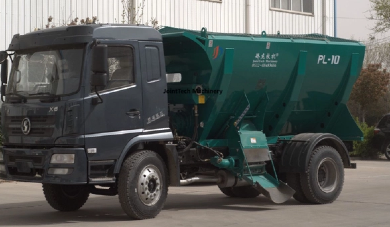
Modern feed spreaders are more advanced than ever, offering features designed to maximize efficiency:
Hydraulic control systems for precise spreading.
Adjustable spreading ranges to accommodate different feeding areas.
Heavy-duty construction for use in tough farm conditions.
Low-maintenance designs to reduce downtime.
Compatibility with tractors and ATVs for versatility across different terrains.
These innovations not only enhance ease of use but also provide additional cost savings over time by reducing breakdowns and ensuring consistent operation.
Feed spreaders also support sustainable farming practices:
Reduced feed waste means fewer resources are consumed in feed production.
Lower emissions from reduced tractor trips help cut a farm’s carbon footprint.
Efficient herd management leads to improved feed-to-production ratios, aligning with the global push for sustainable livestock farming.
By adopting feed spreaders, farms not only save money but also contribute to environmentally responsible practices.
Not all feed spreaders are created equal. When selecting one, farmers should consider:
Herd size and feeding frequency
Compatibility with existing farm equipment
Type of feed used (pellets, silage, grain, or mixed rations)
Durability and ease of maintenance
Budget and expected return on investment
By carefully evaluating these factors, farms can choose a feed spreader that maximizes both efficiency and cost savings.
The rising costs of labor and the demand for greater efficiency in cattle farming have made feed spreaders indispensable. These machines not only reduce labor expenses but also improve feed consistency, cattle health, and overall farm productivity. For cattle farmers seeking to remain competitive and profitable, a feed spreader is more than just equipment—it is a strategic investment in the future of their operations.
If you are exploring options to streamline feeding operations and reduce labor costs, consider turning to trusted suppliers like www.jmachinery.com. Their expertise in agricultural machinery can help you find the right feed spreader solution for your farm, ensuring long-term savings and sustainable growth.


