

Views: 0 Author: Site Editor Publish Time: 2025-11-14 Origin: Site


In today’s rapidly evolving agricultural landscape, sustainability has become more than just a buzzword—it is a necessity. Farmers across the globe face increasing pressure to maximize efficiency, reduce environmental impact, and maintain profitability, all while feeding a growing global population. One piece of equipment that is making a significant difference in this journey toward sustainability is the feed spreader. By mechanizing and optimizing the way feed is distributed to livestock, feed spreaders play a vital role in minimizing waste, improving animal health, and reducing overall costs.
This article explores the relationship between sustainable agriculture and feed spreaders, highlighting how this simple yet powerful machine can transform farm operations by cutting feed waste and boosting resource efficiency.
Feed accounts for a significant portion of operational expenses on any livestock farm, often representing up to 60–70% of total production costs. Every pound of feed wasted directly affects a farm’s profitability. But waste is not only an economic problem—it’s also an environmental one.
When feed is left uneaten or spoiled, the resources used to grow, harvest, and transport that feed—land, water, energy, and labor—are also wasted. Additionally, decomposing feed releases greenhouse gases such as methane, contributing to climate change. By addressing feed waste, farmers can improve profitability while also contributing to environmental sustainability goals.
Feed spreaders are engineered with the goal of delivering precise amounts of feed to livestock in a uniform and controlled manner. While this might appear straightforward at first glance, the technology behind these machines generates a ripple effect of benefits that directly influence feed efficiency, resource management, and farm profitability. By minimizing waste and improving consistency, feed spreaders play a pivotal role in sustainable farming operations.
Traditional manual feeding methods often create uneven feed piles. This inconsistency can lead to dominant animals consuming more than their share while weaker or younger livestock struggle to access adequate nutrition. A feed spreader ensures an even distribution of feed along troughs, bunks, or open pastures, giving each animal fair access. This balanced approach reduces trampling and scattering, which are common causes of feed loss, and guarantees that every bite counts toward animal health and productivity.
Spoiled feed not only represents wasted money but also risks livestock health. When feed is dumped in large heaps, it is more vulnerable to contamination from manure, urine, or excess moisture. These conditions promote the growth of mold or bacteria, rendering portions of the feed inedible. Feed spreaders counter this by laying down thin, consistent layers, reducing surface exposure and keeping feed fresher for longer. As a result, farms experience fewer losses due to spoilage, while livestock benefit from cleaner, safer nutrition.
Modern feed spreaders often come with advanced calibration systems, allowing farmers to control the precise amount of feed dispensed. This feature enables tailored feeding strategies for livestock based on age, weight, or production stage, ensuring that no feed is wasted through overfeeding. By delivering exact rations, feed spreaders align nutrition with herd needs, improving feed conversion rates and cutting down unnecessary consumption.
Human error is a common factor in feed loss. On large farms, where multiple workers may handle distribution, inconsistencies in measurement, timing, or placement are inevitable. Automating the process with a feed spreader eliminates much of this variation, ensuring that feed delivery is consistent day after day. This standardization not only improves operational efficiency but also protects against accidental overuse or mishandling that could otherwise increase waste.
In short, feed spreaders combine technology and practicality to address feed waste from multiple angles—distribution, preservation, measurement, and consistency—making them indispensable tools in the pursuit of sustainable livestock farming.
Feed spreaders contribute to sustainability on multiple fronts, going beyond waste reduction to improve environmental stewardship and farm resilience.
Every ton of feed saved translates into fewer acres of crops grown, less water used for irrigation, and reduced energy consumption for processing and transportation. Feed spreaders help farms maximize the return on these resources, making agriculture more efficient overall.
When feed waste is minimized, less decomposing organic matter contributes to methane emissions. Furthermore, feed spreaders reduce the number of trips required for feed distribution, lowering fuel use and cutting carbon emissions from farm vehicles.
Cattle receiving evenly distributed and uncontaminated feed are healthier and more productive. Healthier animals require fewer veterinary interventions, antibiotics, and medications—further reducing the environmental footprint of farming.
By reducing waste at the feeding stage, feed spreaders align with the principles of circular agriculture, where resources are used as efficiently as possible, and byproducts are minimized. Farms that integrate feed spreaders into their operations often find it easier to meet sustainability certifications or environmental compliance requirements.
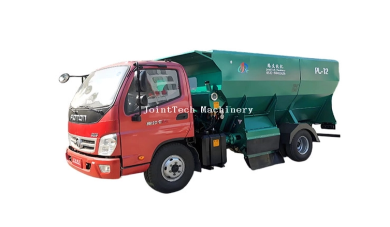
On a 1,000-head dairy farm, the adoption of feed spreaders reduced feed waste by an estimated 15%. Over a year, this translated into thousands of dollars saved in feed costs, alongside significant reductions in the volume of spoiled silage. The farm was also able to cut tractor fuel consumption due to more efficient feeding routes.
In areas where water and feed crops are scarce, feed spreaders helped reduce losses from contamination by dust and moisture. By distributing feed in smaller, cleaner amounts, cattle were more likely to consume their full ration, maximizing nutritional intake and minimizing environmental stress.
For smaller farms, the biggest advantage of feed spreaders was labor efficiency. With only one operator needed, family members were able to allocate time to other tasks, reducing overall operating costs while keeping feed waste under control.
To maximize the benefits of feed spreaders, farmers should adopt best practices that align with sustainability goals:
Calibrate Regularly: Ensure that the feed spreader is correctly adjusted to deliver accurate rations.
Monitor Animal Consumption: Observe livestock feeding habits to identify areas where adjustments can further minimize waste.
Maintain Equipment: Regular servicing prevents malfunctions that could lead to inconsistent feed distribution.
Integrate with Feeding Strategies: Pair feed spreader use with nutritional planning to ensure that animals receive balanced diets without excess.
Train Operators: Proper training ensures the machine is used effectively, minimizing mistakes that can cause waste.
Sustainability in agriculture requires a balance between productivity, profitability, and environmental stewardship. The feed spreader is a prime example of how technology can help achieve this balance by reducing feed waste. From precision distribution to labor efficiency and environmental benefits, feed spreaders are an essential tool for modern cattle farms looking to thrive in a resource-conscious world.
By adopting feed spreaders, farmers can cut costs, reduce their environmental footprint, and ensure that resources are used as effectively as possible—all while supporting the health and productivity of their herds.
For those interested in incorporating advanced feed spreader solutions into their operations, exploring innovative products from www.jmachinery.com can provide valuable insights and reliable equipment options. Their expertise in agricultural machinery makes them a trusted partner for farms striving to achieve long-term sustainability.


