

Views: 0 Author: Site Editor Publish Time: 2025-11-24 Origin: Site


Goats are among the most versatile and resourceful livestock animals, valued for their milk, meat, fiber, and role in land management. Yet, raising healthy goats requires more than providing access to feed—it involves ensuring that nutrition is distributed evenly and consistently among the herd. In many farms, this balance is achieved with the help of feed spreaders, equipment designed to deliver feed efficiently and uniformly. While often considered a tool for larger livestock, feed spreaders are becoming increasingly recognized as essential for goat farmers who want to improve herd health, reduce waste, and optimize productivity.
This article explores how feed spreaders contribute to goat health, why balanced nutrition is critical, and how modern equipment can make a difference in both small-scale and commercial goat operations.
Balanced nutrition is the cornerstone of goat health. Unlike some other ruminants, goats are selective feeders, often preferring to browse shrubs, weeds, and leaves rather than graze pasture alone. While this foraging behavior is beneficial, it does not always guarantee that goats receive the nutrients they need for growth, reproduction, and milk production.
Energy Requirements: Goats need energy from carbohydrates and fats to sustain daily activities and maintain body weight.
Protein Intake: Proteins are essential for muscle development, milk production, and immune system function.
Vitamins and Minerals: Micronutrients like calcium, phosphorus, selenium, and vitamin A are critical to preventing metabolic diseases.
Fiber: Adequate roughage is necessary for healthy rumen function and digestion.
When feed is not distributed properly, dominant goats often eat more than they require, leaving weaker or younger goats undernourished. This imbalance can lead to reduced productivity, slower growth, and even illness in the herd.
Traditional feeding methods, such as hand-feeding or simply placing feed piles in troughs, present several challenges:
Feed Competition: Stronger goats push weaker ones aside, leading to uneven intake.
Wastage: When feed is scattered unevenly or spilled, goats may trample on it, making it unsuitable for consumption.
Labor Intensity: Hand-feeding large herds is time-consuming and physically demanding.
Inconsistent Rations: Without proper measuring or spreading, some goats may receive more concentrated feed while others get less, creating nutritional imbalances.
These inefficiencies highlight the need for modern solutions like feed spreaders, which improve feeding practices and overall herd management.
A feed spreader is a machine designed to evenly distribute feed across a designated area. By mechanizing the process, feed spreaders address many of the challenges farmers face when feeding goats.
Even Distribution: Feed spreaders ensure every goat has access to the same quality and quantity of feed, reducing dominance issues.
Portion Control: Adjustable settings allow farmers to regulate feed quantities according to herd size and nutritional requirements.
Reduced Waste: By placing feed directly in troughs or along controlled lines, less feed is lost to trampling and contamination.
Time Efficiency: Feeding large groups of goats takes minutes instead of hours, freeing farmers to focus on other aspects of herd management.
For goats in particular, where herd dynamics strongly influence feeding behavior, these advantages can directly impact health and productivity.
Uneven feeding often results in weaker goats consuming inadequate amounts of feed. Over time, this leads to stunted growth, poor coat condition, and reduced fertility. Feed spreaders eliminate such disparities by giving each goat equal opportunity at mealtime.
For dairy goats, consistent access to balanced nutrition is crucial for maintaining milk yield and quality. Even minor nutritional deficiencies can impact lactation. Feed spreaders support uniform dietary intake, ensuring higher overall productivity.
Competition at feeding time can cause stress within the herd, leading to aggressive behavior, injuries, or social tension. By ensuring feed is spread evenly across larger areas, feed spreaders reduce crowding and create a calmer environment.
Proper nutrition strengthens the immune system, helping goats resist diseases such as pneumonia, parasites, or mineral deficiencies like white muscle disease. Consistent feed distribution is a simple but effective way to protect herd health.
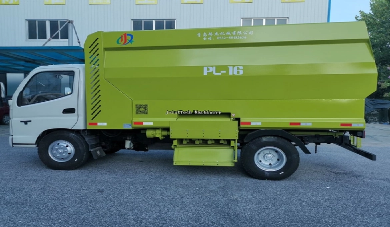
These are smaller, hand-pushed devices suitable for small-scale goat farms. They are affordable and effective for distributing grain, pellets, or hay evenly without requiring significant investment.
For medium to large goat farms, tractor-mounted or tow-behind feed spreaders allow for efficient distribution across large areas. These machines can handle heavier feed loads and are ideal for farms integrating goats with other livestock.
In advanced goat dairies or large-scale operations, automated feed spreaders integrated with conveyor belts or programmable systems deliver precise rations multiple times a day. These systems reduce labor costs and enhance feeding consistency.
To maximize the benefits of feed spreaders, farmers should adopt the following best practices:
Calibrate Regularly: Ensure the machine is set to deliver the correct amount of feed based on herd size and nutritional needs.
Match Feed Type: Different feed types (pellets, hay, grains) require different spreader mechanisms for optimal distribution.
Clean and Maintain Equipment: Regular cleaning prevents mold growth or contamination, protecting goat health.
Monitor Goat Behavior: Even with even feed distribution, farmers should observe goats to ensure weaker individuals are still consuming enough.
Integrate with Feeding Schedule: Spreaders should be used consistently at the same times daily, as goats thrive on routine.
Using feed spreaders not only benefits goats but also makes sense for farmers and the environment.
Cost Savings: Reduced waste and more efficient use of feed lower operational expenses.
Time Savings: Farmers save significant labor hours, allowing them to focus on herd management or farm expansion.
Environmental Impact: Less wasted feed means reduced organic waste buildup, lowering the risk of attracting pests or contributing to soil imbalance.
Sustainability: Many modern feed spreaders are designed with energy efficiency in mind, aligning with sustainable farming practices.
Consider a dairy goat farm transitioning from hand-feeding to a tractor-mounted feed spreader. Initially, the farm reported uneven milk yields and frequent dominance struggles at feeding time. After introducing the spreader:
Feed was distributed evenly along a 50-meter trough.
Competition decreased, resulting in calmer feeding sessions.
Milk yields increased by 12% within three months.
Feed costs were reduced by nearly 15% due to lower wastage.
This example demonstrates how simple equipment upgrades can lead to measurable improvements in both animal welfare and farm profitability.
For goat farmers, achieving balanced nutrition is essential to maintaining herd health, productivity, and profitability. Feed spreaders play a crucial role in solving common feeding challenges by ensuring even distribution, reducing waste, and improving efficiency. Whether on a small family farm or a large commercial dairy, integrating feed spreaders into daily operations can lead to healthier goats, calmer herds, and better economic returns.
As goat farming continues to expand worldwide, adopting efficient tools like feed spreaders will become increasingly important. For those looking to explore reliable feed spreading equipment designed for modern livestock needs, we recommend visiting www.jmachinery.com to learn more about advanced solutions. Their expertise and range of products can help farmers take goat nutrition and health management to the next level.


