Always Committed To
Making Better Machine
Precision-Engineered Livestock Solutions for Global Farms. High-Efficiency Mixers, Collectors & Feeders Designed to Maximize Your Productivity.

 English English
Views: 0 Author: Site Editor Publish Time: 2026-08-21 Origin: Site


Farm margins face immense pressure today. Feed easily represents the highest variable cost in any livestock operation. You simply cannot afford to waste it. Current labor shortages and soaring commodity prices heavily compound this financial strain. Relying on outdated distribution methods accelerates spoilage and uneven nutrition. A modern Feed Delivery Box is not just a convenience tool. It serves as a critical mechanism to aggressively control feed conversion rates. We use it to reduce costly shrink and standardize daily rations across the herd. Predictable feeding protects your bottom line. This comprehensive guide evaluates the core operational benefits and adoption risks of upgrading your system. You will discover exactly how to shortlist the right equipment for your specific farm size. We will outline essential features, highlight common integration mistakes, and detail strategies to maximize your feeding efficiency.
Transitioning to a feed delivery box directly addresses feed shrink, often recovering 5–15% of lost feed costs through precision distribution.
Integration with onboard scales transforms feed delivery from a manual chore into a trackable data point for herd health management.
Evaluating equipment requires matching tractor hydraulic/PTO capacities with the box’s discharge requirements to avoid operational bottlenecks.
While upfront capital expenditure is significant, ROI is typically achieved through labor reduction and improved feed conversion ratios within 18–36 months.
We must evaluate the hidden costs of inefficient feeding. Manual feed distribution drains profitability quickly. Wind blows expensive supplements away before livestock can consume them. Uneven bunk distribution leaves weaker animals hungry. Dominant animals overeat and risk dangerous metabolic issues like acidosis. Over-feeding wastes money daily. We cannot ignore these compounding financial losses in modern agriculture.
Mechanization changes this dynamic entirely. A mechanized Feed Delivery Box dramatically reduces your daily feeding time. Operators finish chores in a fraction of the time previously required. You can then reallocate your farm labor. Workers pivot to high-value tasks. They focus on herd health monitoring and facility maintenance instead of scooping grain.
Consistency acts as a vital metric for success. Predictable distribution mitigates livestock stress. Scheduled feeding stabilizes metabolic performance. Animals thrive when they know exactly when food arrives. Uniform rations improve feed conversion ratios. They boost daily weight gain across the entire herd. Routine builds a healthier, more productive livestock environment.
Let us look at the primary inefficiencies you eliminate:
Wind Loss: Exposed feed blows away during manual bucket handling.
Spoilage: Uneven distribution leaves uneaten feed to rot in bunks.
Labor Burnout: Workers spend exhausting hours manually pitching feed.
Inconsistent Rations: Guesswork leads to costly nutrient imbalances.
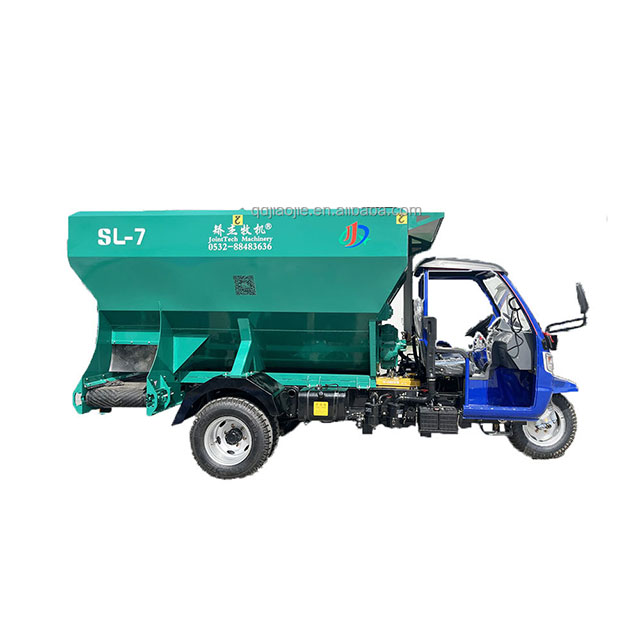
Upgrading your farm equipment yields immediate results. Specific mechanical features drive tangible operational outcomes. Let us break down these core advantages step by step.
Precision Auger or Belt Discharge
Outcome: This feature delivers an even ribbon of feed across the bunk. It prevents dominant animals from gorging themselves. An even spread ensures uniform intake across the entire herd. Every animal receives its required daily nutrition. This reduces competition and lowers overall herd stress.
Onboard Weigh Scales and Load Cells
Outcome: Precision scales enable strict compliance with prescribed rations. You eliminate all feeding guesswork. Nutritionists design specific mixes for optimal growth. Load cells provide auditable consumption data. We track exact intake amounts daily. This data helps you spot early signs of herd illness before symptoms worsen.
Enclosed or Semi-Enclosed Designs
Outcome: Weather constantly threatens feed quality. Rain and wind degrade valuable mixed rations quickly. Enclosed boxes protect commodity feeds during transit. You can safely haul feed from sheds to distant pastures. Moisture ruins dry matter intake. Protection prevents costly spoilage before delivery ever occurs.
High-Capacity Hoppers
Outcome: Large hoppers reduce the trips required per feeding cycle. You cut farm fuel consumption significantly. Fewer trips minimize wear on your prime movers. Tractors and trucks last longer. It optimizes your daily operational timeline and keeps equipment in the field longer.
You must match equipment specifications to your unique farm layout. Buying the wrong size creates daily operational friction. We use specific criteria to evaluate machinery options carefully.
You need a framework for calculating necessary box volume. Do not guess your required capacity. Calculate it based on herd size and feeding frequency. Feed density plays a massive role. Dense grains require less physical volume than bulky silages. A Feed Delivery Box must hold enough payload to minimize wasteful refill trips.
Evaluate the differences between augers and conveyor belts. Augers provide extreme durability. They handle heavy grains and dense commodities easily. However, augers can damage delicate feeds. Conveyor belts offer gentle handling. Use belts for specialized rations or flaked grains. They prevent particle separation during bunk delivery.
Mobility defines how you operate daily. Trailer-mounted models offer multi-site flexibility. You can detach them quickly when you need the tractor elsewhere. Truck-mounted models serve high-speed needs. They excel at large-scale distribution across vast acreages. Choose based on your primary travel distances and road conditions.
Modern farming relies heavily on data. Assess equipment compatibility with your existing management software. Look for Bluetooth scale displays. Cloud-based feed tracking synchronizes data instantly. It allows managers to view feed records remotely. Seamless integration prevents manual data entry errors and streamlines farm audits.
Feed Delivery Discharge Comparison Chart
Discharge Mechanism | Best Feed Types | Primary Advantages | Potential Drawbacks |
|---|---|---|---|
Heavy-Duty Auger | Dense grains, heavy mixed rations | High durability, fast unload speeds | Can crush or damage delicate flaked feeds |
Conveyor Belt | Delicate pellets, specialized rations | Gentle handling, zero particle separation | Requires careful tracking and tension maintenance |
Every equipment upgrade brings adoption risks. You must prepare for operational shifts. Understanding these realities prevents frustrating downtime during critical feeding windows.
We often see buyers make a critical mistake. They mismatch the box's hydraulic requirements with existing tractor fleets. PTO capacities must align perfectly. Ensure your tractor generates enough hydraulic flow. Insufficient flow causes slow discharge rates. It overheats tractor hydraulics quickly. Always verify technical specifications before purchasing.
Moving parts require strict attention. Bearings, chains, and augers demand regular greasing. You must enforce strict maintenance schedules. Neglect leads to catastrophic downtime. Breakdowns during winter feeding create massive stress. Stock spare shear pins locally. Implement a weekly visual inspection protocol to catch issues early.
Staff must learn how to use new technology. Transitioning to scale-equipped boxes requires training. Operators must understand scale calibration completely. Data entry mistakes ruin ration formulations. Teach your team how to zero out scales accurately. Proper training prevents expensive over-feeding errors from derailing your budget.
Farm infrastructure dictates equipment choices. Address the need for adequate turning radii. Feed alleys must accommodate wider equipment. Bunk heights must match the delivery chute. Measure your tightest corners before buying. Ensure the chute clears your highest fence lines safely.
Best Practices and Common Mistakes
Best Practice: Standardize your feed mixing times. Consistent mix times prevent ration sorting in the bunk. Livestock will not pick through a well-mixed ration.
Common Mistake: Ignoring drive chain tension. Loose chains slip and wear out sprockets prematurely. Check and adjust chain tension monthly to extend equipment lifespan.
Selecting the right model requires strategic planning. You must evaluate long-term support systems. Equipment is only as reliable as the dealer standing behind it.
You must partner with reliable local dealers. Breakdowns happen at the worst possible times. Your dealer must stock critical wear parts. Sprockets, bearings, and shear pins need same-day availability. Waiting three days for shipping starves your livestock. Prioritize brands backed by robust local service networks. Strong dealer support guarantees operational continuity.
Never buy blindly from a product brochure. We strongly recommend requesting an on-farm demonstration. Test the equipment using your actual daily feed mix. Verify flowability through the discharge chute. Confirm discharge consistency across your existing bunks. A physical demo reveals hidden compatibility issues immediately.
A dependable feed distribution system transforms daily chores. It represents a highly strategic upgrade for modern farms. Operations transition from intuition-based feeding to data-driven management. You eliminate guesswork and enforce strict nutritional consistency. Efficiency-focused operations consistently outperform manual setups in competitive markets.
Your next step requires decisive action. Audit your current feed waste percentages this week. Calculate exactly how much spoiled feed you throw away. Consult with local equipment dealers. Map out a customized equipment strategy. Start treating your feed inventory as your most protected asset.
A: Calculate your size using a basic formula. Multiply your number of head by the daily ration volume per head. Divide this by your desired number of trips. You must account for bulk density. Lighter silages require significantly more physical volume than heavy grains.
A: Some modern models offer excellent versatility. However, buyers must specify their feed type. High-moisture feeds behave differently. Wet silage may require stainless steel liners to prevent corrosion. It might also need specific auger pitching to prevent bridging.
A: Baseline requirements vary significantly. Typical pull-type models require between 50 and 100 HP. This dependency relies heavily on your payload weight. It also matters whether the discharge system uses a PTO or a hydraulic drive mechanism.
A: Yes, onboard scales remain standard for buyers focused on fast returns. Precision weighing eliminates costly over-feeding. The immediate reduction in feed waste typically pays for the scale upgrade within the very first year of ownership.


