Always Committed To
Making Better Machine
Precision-Engineered Livestock Solutions for Global Farms. High-Efficiency Mixers, Collectors & Feeders Designed to Maximize Your Productivity.

 English English
Views: 0 Author: Site Editor Publish Time: 2026-08-28 Origin: Site


Livestock operations face unprecedented pressures in today's demanding agricultural landscape. Escalating feed commodity costs and persistent agricultural labor shortages constantly squeeze operational margins. You might currently rely on familiar traditional methods, such as manual bunk feeding or free-choice hay. Alternatively, you might be considering the mechanized precision of a modern Feed Delivery Box. The choice between these two systems fundamentally impacts your daily workflow and your ultimate bottom line. So, which method works better for your specific farm? It depends heavily on your exact herd size, available labor pool, and precise nutritional goals. We will evaluate both approaches objectively throughout this comprehensive guide. This comparison helps you determine if the initial capital investment of mechanized delivery outweighs the hidden inefficiencies of traditional feeding methods.
Precision vs. Accessibility: Feed delivery boxes provide ration accuracy and consistency, whereas traditional methods offer lower barriers to entry.
Waste Reduction: Mechanized delivery significantly cuts feed sorting and waste, directly impacting the bottom line.
Labor Economics: A feed delivery box shifts labor from manual, time-intensive tasks to equipment operation and management.
ROI Thresholds: The transition from traditional feeding to a feed delivery box typically becomes financially viable once an operation reaches a specific scale or feed volume threshold.
Traditional feeding methods represent the historical baseline for most livestock operations across the globe. We define this operational approach broadly. It encompasses free-choice hay access, manual bunk feeding, unrolling bales directly in pastures, and non-weighed, non-mixed ration distribution. You simply provide feed to the animals using minimal mechanical intervention.
These methods remain highly popular for several valid reasons. Traditional strategies excel in specific scenarios where simplicity is paramount.
Low initial capital expenditure: You avoid purchasing expensive specialized mixing equipment.
Minimal equipment maintenance: Fewer moving parts mean a much lower risk of mechanical downtime.
Flexibility: These methods perfectly suit smaller herds or low-intervention grazing operations.
However, traditional feeding also introduces significant operational challenges. It fails when you demand tight control over animal nutrition and facility resources.
High nutritional variance: Cattle will actively sort through their feed. Dominant animals consume the highest quality forage, leaving poorer materials behind.
Increased waste and spoilage: Unrolled bales suffer from trampling and weather exposure.
High manual labor requirements: Pitching hay or hauling buckets manually severely limits operational scalability.
Common Mistake: Many farmers underestimate the true financial impact of feed waste. Allowing animals to trample hay often leads to invisible daily losses. Over a single winter, these small losses accumulate into thousands of dollars in wasted forage.
A modern Feed Delivery Box transforms agricultural feeding into a precise science. We define this as tractor-pulled or truck-mounted equipment purposefully designed to mix, transport, and dispense calibrated feed rations directly into bunks. You no longer guess the nutritional intake. Instead, you control every single bite your herd consumes.
The core functionality relies on heavy-duty engineering and smart technology. You must understand the essential mechanics driving these systems.
Load Cells (Scales): Integrated digital scales weigh every ingredient during loading. You achieve exact ration precision.
Augers and Paddles: Internal mixing mechanisms blend roughage, grains, and supplements thoroughly. They prevent animals from separating tasty ingredients from the necessary roughage.
Side-Discharge Mechanisms: Automated chutes or conveyors distribute the mixed feed evenly along the bunk line while you drive.
The strategic purpose behind these machines is simple but powerful. They are specifically designed to deliver a Total Mixed Ration (TMR). When you use a Feed Delivery Box, you maximize feed conversion ratios. Every animal receives an identical nutritional profile, which strongly promotes herd uniformity and predictable growth rates.
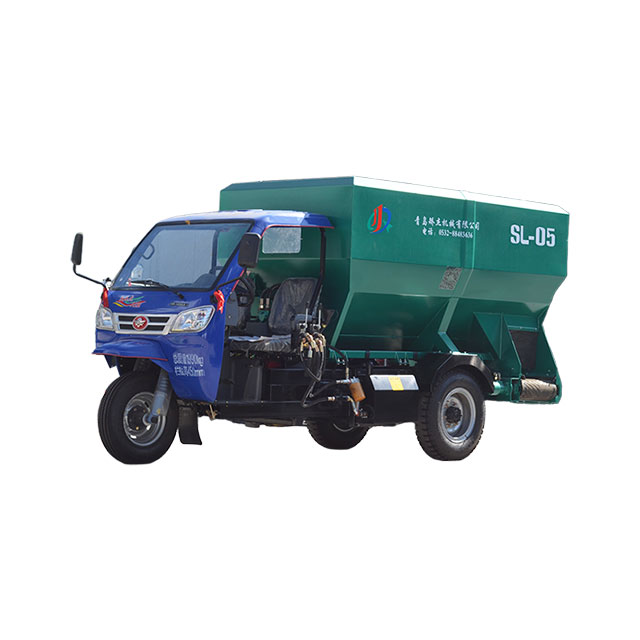
You must weigh multiple operational dimensions before upgrading your farm infrastructure. This section contrasts traditional approaches against mechanized delivery across four critical areas.
Traditional feeding inherently causes variable intake. When you provide separate grains and forage, animals selectively eat the most palatable items first. Dominant animals over-consume high-value nutrients. Submissive animals inevitably receive the poorer quality leftovers. This creates an uneven herd.
Conversely, a Feed Delivery Box ensures nutritional consistency. The machine blends everything uniformly. It prevents sorting behavior entirely. Every bite becomes nutritionally identical. This precision actively supports consistent growth rates, higher milk production, and steady weight gain across your entire herd.
Waste directly eats into your profit margins. Traditional feeding wastes a shocking amount of feed. When you unroll bales in a muddy pasture, waste can routinely exceed 15-20%. Animals trample the forage, defecate on it, and leave it exposed to rain.
Mechanized delivery sharply reduces this problem. A Feed Delivery Box utilizes controlled bunk distribution. It keeps the feed off the ground. The mixing process also restricts sorting behavior. Consequently, you keep waste strictly managed. Most modernized operations lower their feed waste to under 5%.
Agricultural labor grows scarcer every year. Traditional methods require heavy manual labor. Carrying buckets, pitching hay, and physically breaking up bales consumes hours. Furthermore, this time requirement increases linearly as your herd size grows. Adding fifty cows means adding hours of physical work.
A mechanized approach transforms this grueling multi-hour chore into a highly efficient tractor route. You load the ingredients using a skid steer. You mix them while driving to the pen. You dispense them in minutes. High efficiency is guaranteed. However, you do require a skilled operator capable of running heavy equipment safely.
Financial structuring varies wildly between these two systems. Traditional feeding demands near-zero upfront capital. You just need basic tools. However, it generates extremely high operating expenses over time. Wasted feed and countless labor hours drain your daily cash flow.
A Feed Delivery Box requires significant upfront capital. You must also budget for ongoing fuel and maintenance costs. Yet, you offset these expenses rapidly through better feed conversion. You purchase smaller volumes of feed because you waste drastically less. Over several seasons, the reduced operating expenses usually pay for the machine.
System Efficiency and Requirement Chart
Operational Metric | Traditional Methods | Mechanized Delivery Box |
|---|---|---|
Ration Precision | Low (Prone to sorting) | High (Uniform TMR) |
Average Feed Waste | 15% - 20%+ | 2% - 5% |
Labor Intensity | High manual physical effort | Low physical, high mechanical |
Initial Equipment Investment | Minimal | Substantial upfront |
Purchasing new equipment solves many problems, but it also introduces new complexities. You must evaluate your current farm infrastructure before making a purchase. Successful integration requires careful planning.
Equipment Compatibility: You cannot just buy any mixer. You must deeply assess your existing tractors. Do they have the necessary horsepower? Do they provide the required hydraulic capacity? A large Feed Delivery Box demands significant power. Pulling a fully loaded mixer through muddy terrain requires a robust, well-maintained tractor fleet.
Facility Infrastructure: Mechanized delivery needs space. You must rigorously evaluate your bunk layouts. Check your alley widths. Measure your turning radii at the end of the barn. Delivery equipment requires adequate spatial clearance. If your alleys are too narrow, the equipment simply will not fit.
Maintenance Dependencies: Relying on machinery introduces the risk of mechanical downtime. Bearings fail. PTO shafts break. You must acknowledge these realities. Successful operations always maintain backup feeding plans. They also establish relationships with dealers for rapid access to replacement parts. Daily greasing and routine oil checks become mandatory chores.
Operator Training: A machine is only as good as its operator. You must train your staff comprehensively. They need to understand digital scale calibration. They must memorize specific loading orders. Dropping hay before grain matters for mix quality. Furthermore, they must maintain consistent delivery speeds to ensure even bunk distribution.
Best Practice: Always load long-stem forages first. Let the internal augers process the roughage before adding heavy grains or wet byproducts. This prevents the machine from bogging down and ensures a much fluffier, uniform ration.
Choosing the right feeding strategy requires matching equipment capabilities to your specific farm conditions. Neither method is perfect for every single scenario. Use this framework to guide your decision-making process.
When to Stick with Traditional Methods:
You operate a farm supporting small, static herd sizes.
You possess abundant, low-cost forage combined with access to low-cost labor.
Your property features mostly unpaved, highly rugged terrain. Heavy delivery equipment would likely get stuck or damage the soil structure.
When to Upgrade to a Feed Delivery Box:
Your operation experiences high daily feed costs. When commodity prices surge, reducing a 15% waste margin yields massive annual savings.
You run a dairy or professional feedlot. In these environments, providing a precise TMR is absolutely non-negotiable for achieving target production outputs.
Your farm faces acute labor shortages. You need to rapidly scale your herd size but cannot physically hire additional staff to feed them manually.
Next-Step Actions: Do not guess your losses. Conduct a rigorous 30-day feed waste audit on your current methods. Track exactly how much feed you provide versus how much is trampled or refused. Then, request equipment specifications from local dealers. Calculate your precise breakeven point based on your local feed ton prices and current labor rates.
Evaluating your feeding system is a crucial step toward securing your farm's future profitability. Neither method discussed here is universally flawless. Traditional methods successfully protect your initial capital, allowing flexibility for smaller setups. Conversely, a Feed Delivery Box systematically optimizes animal nutrition, saves daily labor hours, and maximizes feed utilization.
For commercial-scale operations heavily focused on margin preservation and herd uniformity, the transition to mechanized delivery is largely inevitable. The sheer cost of wasted feed and manual labor eventually outweighs the purchase price of the equipment.
We encourage you to consult directly with an independent agronomist or a certified livestock nutritionist. Pair their dietary advice with insights from a trusted equipment dealer. Map out a site-specific projection. Take control of your feeding program today to build a more efficient, profitable operation tomorrow.
A: Typically, operations scaling past 50-100 head begin to see rapid financial returns. This varies depending on your specific species and production goals. However, crossing this threshold usually generates enough labor and feed savings to offset the equipment purchase easily.
A: By completely eliminating ground feeding and restricting sorting behavior, operations frequently reduce waste from a staggering 15-20% down to just 2-5%. You keep the feed in the bunk where it belongs, saving significant commodity costs over the year.
A: It depends heavily on the box size. Pull-type units require specific PTO horsepower and minimum hydraulic outputs. Operators must carefully match the implement's requirements to their existing fleet to avoid stalling or causing mechanical damage during operation.
A: It requires strict adherence to a routine maintenance schedule. You must regularly grease fittings, check oil baths, and visually inspect auger wear. Fortunately, modern units are engineered for extreme agricultural durability, making daily upkeep straightforward for trained staff.


