

Views: 0 Author: Site Editor Publish Time: 2026-11-16 Origin: Site


Managing a busy agricultural operation is no small feat. Picture the daily chaos of trudging through a muddy holding pen. You are attempting to separate a stubborn 1,500-pound Holstein for a routine veterinary check. Manual restraint methods often cause unnecessary stress. They elevate safety risks for workers and consume hours of valuable time. Efficient herd management must start with the right infrastructure.
Traditional feed barriers simply cannot keep up with the demands of a high-producing dairy or beef facility. Today, integrating a cow headlock for cattle farm operations provides a safe and fully modernized solution. By securely holding animals at the feed bunk, this specialized equipment transforms chaotic feeding times into streamlined management opportunities. In this comprehensive guide, you will learn exactly how these mechanisms operate, their true impact on animal welfare, and how to select the best system for your specific needs.
Automated Efficiency: Secure an entire group of cows simultaneously with a single lever to drastically reduce daily labor hours.
Enhanced Safety: Modern designs incorporate emergency bottom-release mechanisms to prevent choking and protect herd welfare.
Versatile Farm Management: Essential for executing routine tasks like vaccinations, artificial insemination, and post-partum checks safely.
Optimized Feeding: High-quality yokes reduce feed bunk competition. This ensures timid heifers get their fair share without negative impacts on overall intake.
Long-Term ROI: Investing in heavy-duty, hot-dip galvanized steel guarantees decades of reliable performance in highly corrosive barn environments.
In decades past, producers relied heavily on simple post-and-rail fences. While inexpensive, these rigid structures offered zero control. They frequently resulted in massive feed waste and severe bullying among the herd. As the agricultural sector advanced, the necessity for smarter technology became undeniable.
Recent industry shifts highlight a massive transition toward precision livestock farming. Agricultural analysts note a surging demand for dynamic, animal-centric restraint systems. This trend is largely driven by stricter animal welfare regulations and an ongoing, severe shortage of skilled farm labor. In contrast to outdated static barriers, automated and semi-automated restraint mechanisms have become indispensable. They are now fundamental for maintaining operational profitability and meeting modern compliance standards.
To fully appreciate this equipment, one must understand its construction from an engineering perspective. A typical self-locking unit consists of several heavy-duty components engineered for relentless daily use. The foundational steel frame provides structural integrity. A pivoting swing arm creates an easy entry point. A central locking pin secures the animal, and a continuous top control rod acts as the operational command center. Together, these elements form a sophisticated yet user-friendly tool that allows producers to work much smarter.
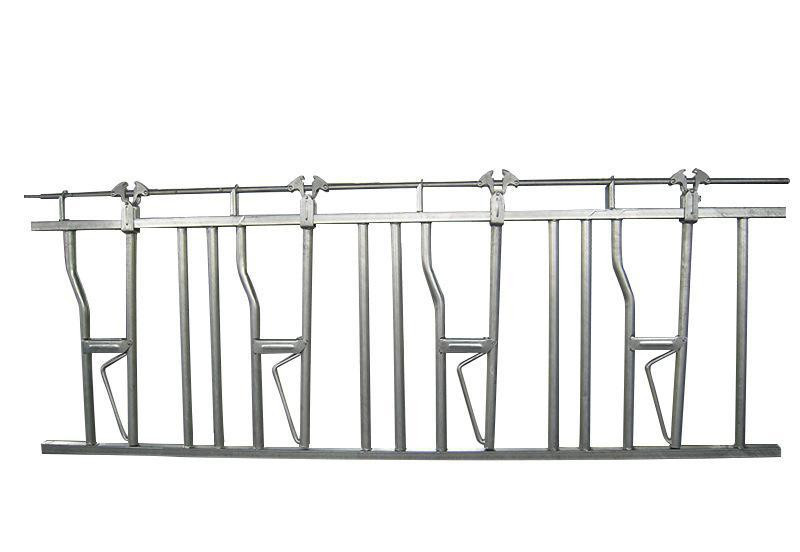
The true genius of this system lies in its utilization of the natural feeding motion of the bovine. During a crisp morning feeding, a cow instinctively lowers her head through the wide upper opening to reach the freshly mixed ration. As she pushes her neck downward and forward, her shoulder engages the pivoting arm. Without any human intervention, the mechanism clicks smoothly into place. This intuitive, gravity-assisted movement minimizes startling noises and keeps the animal entirely relaxed.
Efficiency in a large commercial barn is dictated by the top control rod. A single, smooth pull of the main lever allows the herdsman to lock a continuous row of fifty or more cows in mere seconds. Furthermore, operational flexibility remains a top priority. Individual release latches enable a veterinarian to keep one specific animal securely held for treatment while simultaneously releasing the rest of the herd back to their freestalls or grazing pastures. This delicate balance of macro-control and micro-attention is the cornerstone of effective herd management.
In any livestock facility, unpredictability is a given. If an animal slips on wet concrete or suddenly collapses, traditional stanchions can become fatal traps. Modern units actively combat this risk through a built-in bottom-release function. Should an emergency occur, the operator can instantly disengage the lower portion of the yoke. This immediate release prevents choking and ensures the downed animal can be safely attended to without panic.
To truly understand the value of upgrading your facility, evaluating the direct differences between old and new infrastructure is vital. The table below outlines the stark contrasts in operational efficiency.
| Feature | Traditional Post-and-Rail | Self-Locking Headlock System |
|---|---|---|
| Labor Efficiency | Requires multiple workers to isolate and restrain a single cow. | One worker can lock and manage an entire row of 50+ cows in seconds. |
| Animal Safety | High risk of slipping, choking, or crushing injuries during vet checks. | Equipped with emergency bottom-release mechanisms to prevent choking. |
| Feed Waste | High. Dominant cows push younger stock away and toss feed. | Low. Individual feeding zones eliminate bullying and feed sorting. |
| Veterinary Access | Dangerous and stressful for both the vet and the animal. | Safe, calm, and highly accessible for AI, vaccinations, and checks. |
Gone are the exhausting days of chasing stressed cows across a slippery holding pen. By utilizing high-quality dairy cattle farm stanchions, complex tasks like artificial insemination, routine vaccinations, and ultrasound pregnancy checks are transformed into calm, one-person jobs. Restraining the bovine comfortably at the feed bunk drastically lowers the risk of crushing injuries for the veterinarian. It also minimizes cortisol spikes in the animal.
During calving season, timing and safety are critical. Installing specialized headlocks in maternity pens grants farm staff immediate, secure access to a laboring mother. Whether you are performing an urgent dilation check, attaching calf pullers, or administering post-partum calcium boluses, the locking system keeps the cow steady and focused. This drastically improves the chances of a successful, complication-free delivery.
Dominant older cows are notorious for aggressively pushing younger heifers away from the best silage. Headlocks establish distinct, individual feeding zones. By physically separating the animals during meal times, you eliminate bunk competition. This ensures that every single cow, regardless of her rank in the herd hierarchy, consumes her required nutritional intake. Ultimately, this reduces expensive feed sorting and waste.
A persistent fear among transitioning farmers is that metal restraints might inhibit eating habits. However, extensive field data proves otherwise. When sized and installed correctly, these systems do not negatively impact Dry Matter Intake. In fact, because timid eaters no longer have to constantly look over their shoulders for aggressive herd mates, they tend to eat more consistently and ruminate better.
Introducing unaccustomed heifers to metal frameworks requires a brief adjustment period. In practical terms, experienced herdsmen highly recommend tying the swing arms in the open position with baling twine for the first three to four days. This allows the young stock to comfortably push their heads through the gaps without the startling sensation of being trapped. Once they associate the metal frame solely with delicious feed, you can initiate the locking sequence.
Not all metalwork is created equal. Premium designs account for bovine anatomy by featuring a forward-leaning profile. This subtle angle allows the cow to reach further into the feed alley for her total mixed ration without bruising her throat or straining her shoulders. Ergonomic considerations directly correlate to higher milk yields and prolonged physical health.
The interior of a dairy barn is a highly aggressive environment. A constant mixture of humid cow breath, acidic manure, and corrosive silage juices will rapidly destroy untreated metal. When sourcing cow stanchions for dairy cattle farm upgrades, demanding specific engineering standards is non-negotiable.
Specifically, look for heavy-duty hot-dip galvanized steel. A premium system should utilize robust steel pipes, typically 42mm or 60mm in diameter, with a minimum 3mm wall thickness. Furthermore, the zinc coating thickness should exceed 80 microns. This specialized galvanizing process coats the steel both inside and out, ensuring your infrastructure withstands decades of abuse rather than rusting out in a few short seasons.
Bovines possess highly sensitive hearing, and the constant clanking of metal hitting metal can elevate herd anxiety. Look specifically for designs integrating heavy-duty rubber bumpers or high-density plastic bushings. These simple yet brilliant additions dampen the harsh metallic sounds during the locking and unlocking phases, maintaining a peaceful, highly productive barn atmosphere.
Herd demographics change, and equipment must adapt. A versatile system features adjustable neck widths to safely accommodate a growing heifer just as well as a mature, broad-shouldered Angus. This adaptability prevents smaller animals from slipping through the yoke and ensures larger breeds do not suffer from restricted breathing or neck abrasions.
Even the most expensive hardware will fail if installed poorly. Standard installations typically fit four to five headlocks per 10-foot panel, but you must measure your bunk length meticulously. Mounting height is equally vital. If positioned too high, cows will suffer throat bruising as they strain downward. If too low, they risk scraping their knees on the concrete curb. Always strictly adhere to the dimensional guidelines provided by the manufacturer.
Preventative care guarantees a maximum lifespan for your capital investment. Establish an annual maintenance checklist. Lubricate all pivoting joints and control rods before winter sets in. Verify that all mounting bolts are tightly torqued, and inspect the rubber noise dampeners for severe wear. Fifteen minutes of proactive maintenance per pen can save thousands of dollars in premature replacement costs.
Selecting the right manufacturing partner is just as critical as the steel itself. Seek out companies possessing a long, proven track record in heavy agricultural engineering. A top-tier supplier, such as Jmachinery, will readily provide custom sizing options, transparent warranty terms, and robust installation support. Trustworthy manufacturers prioritize animal welfare standards, ensuring their products are rigorously field-tested before they ever reach your farm.
While premium cattle headlocks require a higher initial capital outlay, the return on investment calculation is incredibly favorable. Factor in the hundreds of labor hours saved annually during vet checks, the dramatic reduction in worker injury claims, and the tangible increase in milk or meat yields resulting from optimized feeding. For the vast majority of commercial operations, this equipment easily pays for itself within the first few years.
Self-locking cattle yokes represent far more than simple metal barriers. They are foundational herd management tools that fundamentally improve how a facility operates. By elevating worker safety, maximizing daily labor efficiency, and prioritizing the anatomical comfort of the livestock, you set your business up for sustainable, long-term success. Whether you are retrofitting an aging dairy barn or breaking ground on a state-of-the-art heifer raising facility, choosing a durable, galvanized, and safety-focused restraint system is the smartest investment you can make. Assess your current feed bunk setup today, and explore the high-quality self-locking cattle headlocks from Jmachinery to take the definitive step toward a more profitable, stress-free farm.
Pricing varies significantly based on the thickness of the steel, the length of the panel, and current raw material costs. Generally, farmers can expect to pay per linear foot or per cow space. It is highly recommended to contact a reputable manufacturer directly to request a customized quote that includes shipping and potential bulk-order discounts.
While some adult headlocks feature adjustable neck spaces, it is generally unsafe to use mature stanchions for young stock. Calves and small heifers can easily slip their entire bodies through adult-sized gaps, leading to escapes or severe trapping injuries. Always install age-and-size-appropriate panels for different pens.
The ideal mounting height depends entirely on the breed and age of the cattle. For mature Holsteins, the bottom rail is typically mounted 20 to 24 inches above the cow standing alley. This height prevents knee scraping while allowing the cow to comfortably reach the feed without straining her neck.
When manufactured with high-quality 3mm steel pipes and properly hot-dip galvanized with an 80-micron zinc coating, these systems are built to endure. With correct initial installation and basic routine maintenance, a premium system can easily last 15 to 20 years, even when constantly exposed to the harsh elements of a commercial barn.
Yes, significantly. By locking cows into individual feeding stations, you prevent dominant animals from walking up and down the bunk tossing the total mixed ration to find the tastiest grains. This forces each animal to eat the balanced ration directly in front of them, improving overall herd nutrition.
Initially, there may be slight hesitation, but bovines are creatures of habit. After a brief training period where the locks are tied open for a few days, the herd quickly associates the equipment with positive reinforcement. Once trained, cows will eagerly and voluntarily lock themselves in without any signs of stress.
Modern, welfare-focused designs are specifically engineered for this dangerous scenario. They feature an emergency bottom-release mechanism. If a cow goes down, the farmer can swiftly pull a safety pin or lever to open the bottom of the yoke. This allows the animal's head to swing free instantly, completely eliminating the risk of choking.


