Always Committed To
Making Better Machine
Precision-Engineered Livestock Solutions for Global Farms. High-Efficiency Mixers, Collectors & Feeders Designed to Maximize Your Productivity.

 English English
Views: 0 Author: Site Editor Publish Time: 2026-07-10 Origin: Site


Misaligning heavy equipment across site requirements leads to accelerated wear. It creates severe safety hazards and compromises your operational efficiency. Buying the wrong machine drains project budgets fast. While both machines share a basic profile, an Agricultural Tractor and an industrial tractor handle fundamentally different physical forces. The former specializes in pulling heavy loads through loose, muddy soil. The latter focuses entirely on lifting and pushing payloads on hard, unforgiving surfaces.
This comprehensive guide breaks down essential structural, mechanical, and operational differences. We help procurement teams and owner-operators select the right asset confidently. You will learn exactly how to match machine geometry to specific site conditions. You can then avoid costly breakdowns and maximize long-term productivity.
Primary Application: Agricultural tractors are engineered for maximum drawbar pull (traction) in soft environments; industrial tractors are built for high front-loader capacities and stability on hard surfaces.
Chassis and Axle: Industrial variants feature heavy-duty, fixed front axles to handle impact, whereas agricultural models prioritize adjustable track widths and ground clearance.
Implement Compatibility: An agricultural tractor standardizes around the 3-point hitch and rear PTO for field implements; industrial tractors often utilize fixed attachments and hydraulic remotes over rear PTOs.
Tread Design: The choice between R-1 (Ag) and R-4 (Industrial) tires dictates performance regarding soil compaction, puncture resistance, and pavement wear.
Equipment design always follows function. Manufacturers build the Agricultural Tractor primarily for drafting. This means pulling heavy implements continuously. Ploughs and seeders require steady speeds. The machine must not stall in deep mud. Engineers place most of the machine weight over the rear axle. This rear bias maximizes ground traction. It forces the rear tires to dig in. The engine provides steady torque to maintain momentum.
Conversely, industrial models prioritize payload capacity over raw pulling force. They handle intense front-end loader work daily. Operators use them for backhoe operations and pushing heavy debris. Their frames remain completely rigid. Engineers balance weight evenly across the entire chassis. This counteracts massive front-end payloads effectively. It prevents the machine from tipping forward during lifts.
Buyers must define their primary business problem clearly. Evaluate your daily workflow. Are you moving through an environment? Farming, tilling, and planting fit this category perfectly. Or are you moving the environment itself? Material handling, grading, and construction require industrial strength. Understanding this fundamental difference prevents costly procurement mistakes.
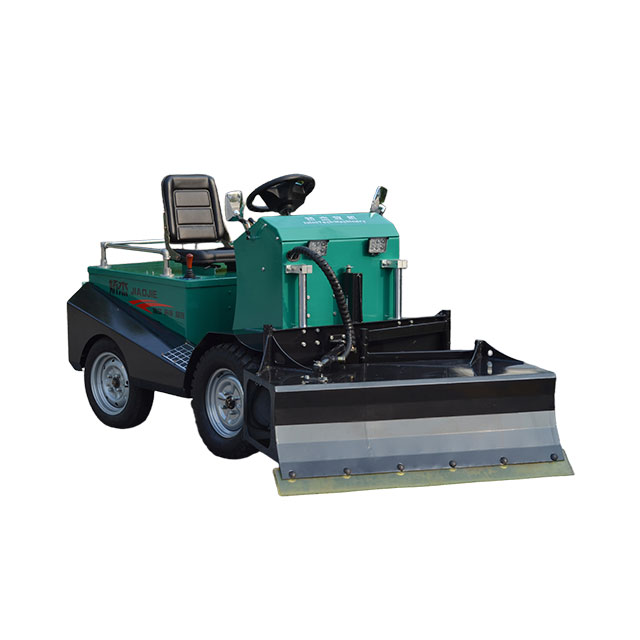
Farm equipment features lighter front axles. Farmers often adjust the track width for row-crop spacing. This design excels in open fields. However, it fails quickly under heavy loader drops. Continuous impacts bend the adjustable components rapidly. We see premature joint failures frequently in these scenarios.
Industrial variants use massive front axles. Manufacturers cast them from solid iron or heavy steel. They are single-piece, non-adjustable components. They absorb intense shock easily. You can drop a loaded bucket onto concrete safely. The axle handles the stress without buckling. It distributes the impact force evenly across the rigid frame.
Farm work requires incredibly precise speeds. An Agricultural Tractor uses creep gears regularly. These ultra-low gears maintain exact travel speeds. A farmer might plant seeds at exactly four miles per hour. The transmission also matches PTO revolutions perfectly. This synchronizes implement speed and ground speed.
Industrial machines require completely different gearing setups. Operators constantly shift from forward to reverse. They use a V-pattern loading method for earthmoving. Torque converters are standard here. Hydrostatic drives and hydraulic shuttle-shifts also dominate the market. These transmissions optimize rapid directional changes. They do not prioritize slow, steady crawling.
Tires define machine capabilities directly. Farm tractors use R-1 or R-1W tires. These feature deep, aggressive lugs. They bite deeply into soft soil. They propel the machine forward in slick mud. However, they wear out rapidly on asphalt. Construction debris punctures them easily.
Industrial equipment uses R-4 tires. These feature much wider profiles. The treads sit much flatter against the ground. They resist punctures from rebar and sharp rocks. They also prevent excessive pavement wear. But they struggle terribly in deep mud. You will lose traction quickly in wet fields.
Farm machines rely heavily on universal standards. They feature the standard 3-point hitch. They also include 540 or 1000 RPM rear PTOs. You can attach thousands of aftermarket implements easily. This creates massive operational versatility.
Industrial machines often lack a 3-point hitch entirely. Sometimes manufacturers provide heavily modified, limited versions. Instead, industrial units focus on hydraulic flow rates. High gallons-per-minute (GPM) pump capacities matter most. These pumps power dedicated, heavy-duty attachments. Sweepers, breakers, and backhoes rely entirely on continuous hydraulic flow.
Component | Agricultural Design | Industrial Design |
|---|---|---|
Front Axle | Lighter, often adjustable for row crops | Massive, cast-iron, fixed construction |
Transmission | Creep gears, optimized for steady speeds | Torque converters, optimized for rapid shifts |
Tires | R-1/R-1W (deep lugs, high traction in soil) | R-4 (wider, puncture-resistant for hard surfaces) |
Linkage & Power | Standard 3-point hitch and rear PTO | Fixed attachments and high GPM hydraulics |
Weight distribution dictates where machines belong. Bringing heavy industrial equipment onto a farm creates severe problems. The balanced weight and R-4 tires compress the earth. This causes massive soil compaction layers. Compacted soil chokes delicate plant roots. It damages crop yields permanently. Water cannot penetrate the hardpan layer. Keep heavy industrial units away from active topsoil.
The reverse scenario causes equally severe damage. Operating farm machines on concrete destroys the equipment. Hard surfaces chew through R-1 tires rapidly. You can ruin a brand-new set in just weeks. The aggressive lugs also scratch and damage finished concrete. They chip away at asphalt edges. Site compliance officers often ban these tires on finished commercial lots.
Brakes define operator safety directly. Industrial models transport heavy, non-braked loads constantly. They operate on steep inclines safely. Manufacturers install heavy-duty wet-disc brakes. These handle intense friction and shed heat efficiently. Standard farm brakes cannot match this stopping capability. Farm brakes overheat quickly under similar industrial cycle times. Brake fade leads to catastrophic accidents on busy job sites.
Environment dictates maintenance schedules directly. Industrial machines operate in brutal conditions daily. Dust, concrete particles, and debris surround them. They require robust air filters and frequent pin greasing. However, their structural maintenance remains surprisingly low. Their rigid frames resist bending and cracking.
Farm machines enjoy a completely different advantage. They possess a vast, commoditized parts network. You can find replacement components everywhere. Local dealers stock belts, hoses, and filters abundantly. Repair networks span across rural communities extensively.
Machines hold value differently across industries. A well-maintained Agricultural Tractor commands high prices consistently. Rural communities always need reliable drafting equipment. Residual values remain strong for decades. They rarely experience steep depreciation cliffs.
Used industrial machines require much more caution. They endure thousands of heavy lifting cycles. This causes hidden internal wear. Buyers must inspect hydraulic systems thoroughly. Pivot pins often show severe wear. Always request fluid oil-analysis before buying. Perform rigorous stress-test inspections. You must verify structural integrity before finalizing any secondary purchase.
Follow a clear sequence to select equipment. Guesswork always leads to poor investments. We recommend this standard industry framework.
Audit the Primary Duty Cycle: Look closely at your daily operations. Does loader work constitute more than 70 percent of operating hours? If so, bias your choice heavily toward industrial variants. Does ground-engagement make up more than 50 percent of the work? Tilling, mowing, and planting demand agricultural configurations.
Assess the Operating Surface: Ground conditions dictate tire and chassis needs entirely. Soft dirt and deep mud require farm-style configurations. Asphalt, gravel, and rough demolition sites demand true industrial strength.
Map Attachment Requirements: Audit your existing tool inventory carefully. Your operation might rely heavily on PTO-driven equipment. If so, a farm unit is completely non-negotiable. Converting industrial machines to run PTO tools requires costly adapters. These adapters rarely perform efficiently.
Actionable Next Step: Do not buy based on brochures alone. Request specific dealer demonstrations on your actual site. Focus intensely on front-axle load ratings. Measure hydraulic cycle times in real-time. Test the machine using your heaviest required attachment.
To finalize your procurement strategy, keep these core principles in mind:
Assess site physics first: Match machine geometry to ground conditions before evaluating engine horsepower.
Audit tool compatibility: Verify PTO and hydraulic needs to avoid expensive aftermarket adapters.
Protect your surfaces: Keep R-1 tires off concrete and heavy R-4 tires off delicate crop soil.
Prioritize axle strength: Choose fixed cast-iron axles if you perform continuous front-loader work.
The final verdict remains straightforward. The choice between these machines is not about inherent superiority. It is about matching structural geometry to site physics. Over-specifying a farm machine for construction tears up the equipment. Under-specifying an industrial machine for farm work tears up the land. Let your primary surface and attachment needs drive the final decision. You will secure reliable performance and protect your capital.
A: Yes, you can use them for light duties. However, their weight distribution makes them highly inefficient for draft work. They usually lack standard 3-point hitches. Their R-4 tires also slip easily in mud. Furthermore, their heavy, balanced frames are prone to compacting crop soil severely.
A: Yes, class-for-class, industrial variants typically have a much higher base operating weight. Manufacturers use heavier frame castings to build them. They feature reinforced front axles to handle shock. They also include built-in counterweights to guarantee front-end loader stability.
A: It is technically possible if wheel rims and clearances align perfectly. However, swapping tires does not change internal gearing. It does not fix hitch limitations either. Doing so may void your warranties if the drivetrain experiences stress beyond its original design parameters.


