

Views: 0 Author: Site Editor Publish Time: 2026-05-04 Origin: Site


You can optimize hybrids and inoculants flawlessly, but sloppy feedout practices will rapidly destroy feed value through aerobic instability. Managing a bunker silo demands precision. When air infiltrates the feed mass, the clock on your nutritional investment starts ticking.
It is time to re-evaluate your extraction methods. Digging heavily into the pile using a standard loader bucket causes deep micro-fractures in the silage mass. These fractures let oxygen penetrate deep into the bunker, triggering rapid yeast and mold growth. This secondary fermentation drives up internal temperatures and dramatically increases dry matter loss before the feed even reaches the bunk.
A high-quality Silage reclaimer acts as a critical risk-management and efficiency tool on modern dairy farms. This comprehensive guide provides a practical framework to match the right reclaimer to your specific bunker infrastructure, host vehicles, and daily feedout volume. We will explore rotor designs, hydraulic requirements, and ROI drivers to help you make a profitable, long-term investment.
The primary ROI of a silage reclaimer comes from minimizing aerobic spoilage at the bunker face and reducing processing time in the TMR Mixer.
Hydraulic compatibility (GPM and PSI) with your existing loaders (skid steers, wheel loaders) is the most common point of failure in implementation.
Equipment selection must align with regional feedout targets (6-12 inches/day in winter, 12-18 inches/day in summer) and structural safety limits.
Rotor design (open vs. closed drum) should be dictated by your primary crop (e.g., corn silage vs. high-moisture alfalfa).
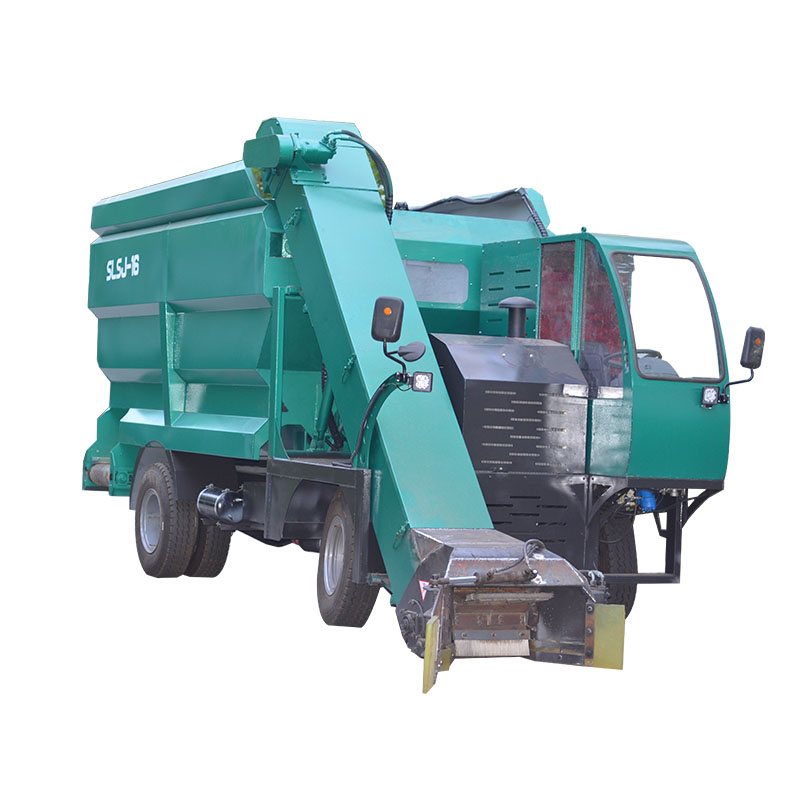
Face management relies entirely on physical mechanics. A clean, sheer face minimizes the total surface area exposed to oxygen. Eliminating loader "bucket gouging" stops secondary fermentation dead in its tracks. When operators dig into a compacted bunker, the upward tearing motion creates invisible fault lines extending several feet into the pile. Oxygen floods these fault lines. Yeasts quickly metabolize the preserving lactic acid, causing pH levels to spike. This undesirable acetic and butyric shift destroys expensive nutrients and causes cows to reject the ration.
Bunker avalanches represent a fatal hazard on dairy operations. Undercutting tall piles creates dangerous overhangs. Massive blocks of compacted forage can collapse without warning. Reclaimers allow for controlled, top-down extraction. This top-down method enables total compliance with strict safety protocols. Standard industry guidelines require keeping ground personnel at a minimum distance of three times the total face height. By shaving the face vertically, you eliminate the unpredictable overhangs endangering your feed crew.
Fighting compacted bunkers wastes tremendous amounts of labor and fuel. Ramming a loader bucket into a dense wall of corn silage burns unnecessary diesel and stresses the vehicle's drivetrain. Reclaimers solve this bottleneck. Pre-milled silage loads faster. Because the reclaimer effectively loosens the feed, the downstream processing equipment requires far less horsepower. Your operators spend less time loading and more time delivering feed to the cows.
Different crops demand different extraction mechanisms. You must match the tool to the specific forage density you harvest.
These units feature cutting blades mounted on an open skeletal frame. The open design allows feed to pass through the rotor structure.
Mechanism: Helical or straight blades bolted to an open cage.
Best for: Long-cut forages and dry hay. The open design proves less aggressive on the feed. It successfully prevents the unwanted reduction of effective fiber particle length, keeping your ration structurally sound.
Trade-offs: The open frame can sometimes wrap tightly if it encounters long twine or extremely stringy alfalfa. Operators must maintain it regularly to prevent material buildup.
These heavy-duty units dominate large-scale dairies feeding highly processed crops.
Mechanism: A solid cylindrical drum featuring welded or bolt-on cutting teeth.
Best for: Highly compacted corn silage and precise face shaving. The solid drum acts as a depth gauge, preventing the teeth from biting too deeply into the wall.
Trade-offs: They weigh significantly more. They require robust hydraulics to spin the heavy mass. They can occasionally pulverize fragile feed if the operator applies them overly aggressively.
These attachments function differently than rotary models, opting for a static cutting action.
Mechanism: Hydraulic jaws powered by heavy cylinders cut solid blocks of feed directly from the wall.
Best for: Smaller dairies or specific bagging/bunker setups. They work exceptionally well when operations require perfectly sealed faces between long feedout intervals.
Trade-offs: Extraction rates run much slower compared to rotary models. They require careful alignment by the operator for every single bite.
Design Type | Primary Mechanism | Ideal Crop Application | Major Limitation |
|---|---|---|---|
Open-Drum / Helix | Skeletal frame, mounted blades | Long-cut forages, dry hay | Prone to wrapping long twine |
Closed-Drum | Solid cylinder, aggressive teeth | Compacted corn silage | Heavier weight, requires high GPM |
Block Cutter | Hydraulic shear jaws | Small volume, long feedout intervals | Slower extraction speed |
You cannot simply bolt any attachment onto your loader and expect success. Evaluating the host vehicle’s Auxiliary Hydraulic Flow (Gallons Per Minute - GPM) and Operating Pressure (PSI) is mandatory. Under-powering the unit leads to constant stalling. When the rotor stalls, hydraulic fluid bypasses the relief valve, creating massive heat. Over-powering the unit damages the reclaimer’s internal motor seals. Furthermore, evaluate lift capacity and reach. The host machine must safely lift the attachment's entire weight, fully extended to the top of the bunker (often 12-14 feet), without creating any tipping risk.
Look closely at how effectively the reclaimer "pre-mills" the silage. Properly faced silage enters your TMR Mixer aerated and completely de-clumped. This specific aeration significantly reduces subsequent mixing times. When the mixer does not have to break apart massive, dense blocks of corn silage, you save valuable tractor fuel. Moreover, pre-conditioned feed minimizes the daily physical wear and tear on mixer knives and heavy augers.
Width and depth directly impact daily efficiency.
Width: Match the reclaimer's total width to the host loader's tire or track width. This prevents the machine from driving over loose, shaved feed on the bunker floor.
Depth: Match the cutting depth to your specific daily feedout rate requirements. Regional feedout targets demand removing 6-12 inches per day in winter climates, and 12-18 inches per day in hot summer climates to stay ahead of spoilage.
Manufacturers typically offer two main drive systems. Evaluating these options depends heavily on your farm's internal maintenance capabilities. Enclosed, oil-bath chain drives offer immense torque multiplication but require diligent oil level checks. Direct-drive hydraulic motors sit entirely enclosed. They eliminate external moving chains, making them ideal for high dust and debris exposure. However, direct drives demand a perfectly matched hydraulic system to survive the torque loads.
Focusing strictly on the initial invoice price ignores the massive operational savings generated daily.
Conceptual math reveals the true value of face management. Imagine saving 3-5% of your total bunker dry matter previously lost to face spoilage and pitch-outs. On a 10,000-ton bunker valued at $60 per ton, a 5% loss equals $30,000 rotting on the pad. Reclaimers directly capture this lost revenue by denying oxygen access to the pile.
Reduced loader fuel consumption adds up quickly. Operators no longer ram the pile at full throttle to break loose compacted feed. Smooth, top-down shaving uses significantly less diesel. Furthermore, you dramatically extend the lifespan of downstream processing components because the pre-conditioned feed flows smoothly.
Calculate the long-term costs associated with replacing carbide or Hardox steel cutting teeth. Open architectures allow easy access for routine greasing. Enclosed systems require less frequent servicing, but the complex internal rebuilds cost much more when they finally fail. Evaluate your shop's capacity before choosing.
Savings Category | Estimated Metric | Financial Impact Driver |
|---|---|---|
Dry Matter Retention | 3% - 5% increase | Eliminates weekly pitch-outs and surface rot. |
Loader Fuel Consumption | 10% - 15% decrease | Eliminates high-RPM ramming into the bunker face. |
Mixer Maintenance | 20% longer knife life | Pre-milled feed reduces torque load on augers. |
Buying the right equipment solves only half the problem. Poor execution on the farm destroys the anticipated ROI.
Operator misuse remains the most common implementation failure. Farmhands frequently apply excessive downward boom pressure rather than letting the rotating drum do the actual cutting. They try to force the tool through the feed. This aggressive forcing bows the attachment frame, breaks cutting teeth, and instantly blows hydraulic motor seals. Operators must learn patience. They need to let the high-speed rotor dictate the drop speed.
Ash and dirt ruin milk production. You must strictly ensure operators do not drag the reclaimer into the bunker floor at the bottom of the pass. Scraping the concrete or dirt pad introduces ash, gravel, and deadly clostridial bacteria directly into the loose feed. Set the loader boom stops correctly to leave an inch of clearance at the floor level.
A reclaimer only works if your team uses it systematically across the entire face. They must maintain a perfectly vertical wall from left to right. Spot-facing or digging random pockets creates dangerous ledges. These uneven ledges collect rainwater, trap melting snow, and promote localized spoilage pockets that ruin the surrounding feed.
Follow a strict, logical sequence before contacting local equipment dealers.
Audit Equipment: Document the exact specifications of your primary and backup loading vehicles. Write down the maximum tipping load, the exact GPM/PSI of the auxiliary hydraulic circuit, and the quick-tach plate style. Never guess these numbers.
Assess Bunker Specs: Measure your maximum pile heights. Calculate your required daily removal volumes based on your herd size. This determines how wide and deep the machine must cut to hit the 12-inch daily removal target.
Demo with Primary Crop: Never buy off a spec sheet. Request an on-farm demo to see exactly how the tooth design handles your specific compaction levels. Assess if it leaves the face perfectly sheer or if it leaves a ragged, torn surface. Watch how it handles your specific crop types, whether heavy corn silage or long-cut alfalfa.
A silage reclaimer acts as much more than a simple loading accessory. It functions as a vital instrument for preserving feed quality, managing dry matter inventory, and protecting farm profitability. The initial capital expenditure often pays for itself within the first year through feed savings alone.
Going forward, prioritize exact hydraulic matching and thorough operator training over flashy brand names or aggressively discounted price points. Train your feeding crew to view the bunker face as a sealed vault. Give them the right tool to unlock that feed without letting spoilage through the front door. Audit your host machines today, measure your daily removal rates, and start scheduling on-farm demonstrations for the upcoming harvest season.
A: Using a standard bucket incurs massive hidden costs. Bucket-gouging causes invisible oxygen penetration deep into the pile. This triggers secondary fermentation, yeast growth, and dry matter loss. Furthermore, undercutting tall piles with a bucket creates dangerous overhangs, leading to severe avalanche risks for your crew.
A: Replacement intervals depend entirely on usage variables. High bunker density, accidental floor scraping, and specific tooth material (carbide vs. standard steel) dictate the wear rate. Most farms evaluate and replace worn teeth seasonally before the major winter feeding period begins.
A: Yes. Loading becomes much cleaner and significantly faster. Because the feed enters the mixer already loosened and de-clumped, you must often reduce your overall mixing time. If you maintain old mixing times, you risk over-processing the already-loosened feed and destroying effective fiber.
A: The reclaimer will suffer from constant hydraulic stalling when it hits dense feed. This forces the hydraulic fluid over the relief valve, generating excessive heat that degrades the oil. You will experience poor, ragged cutting performance and drastically slower loading times.


