

Views: 0 Author: Site Editor Publish Time: 2026-11-16 Origin: Site


The global landscape of food logistics is shifting rapidly. Supply chain managers face a stark reality today. Moving delicate pastries across a bustling city requires vastly different machinery than hauling tons of livestock nutrition to remote farms. Standardized fleets no longer cut it. Profitability now hinges on matching the precise mechanical asset to the cargo and the terrain. When managing bulk agricultural commodities, relying on generic transport is a guaranteed path to product spoilage and inflated labor costs. Operations must look closely at specialized engineering solutions that perfectly balance payload capacity, discharge automation, and rugged durability.
Asset Matching Dictates Efficiency: Selecting the right transport asset depends entirely on cargo properties. Moving ready-to-eat urban meals involves completely different physics and regulations compared to managing dense agricultural bulk commodities.
Automation Reduces Overhead: Self-navigating robots reshape urban sidewalks, while heavy-duty automated steel discharge systems dominate rural agricultural sectors.
Maintenance Defines ROI: Rigorous upkeep schedules, fuel consumption rates, and maximum payload utilization serve as the primary metrics for calculating true commercial fleet profitability.
Infrastructure Drives Selection: Local road quality and emission frameworks directly dictate vehicle viability. Agile micro-mobility thrives on pavement, whereas automated bulk transport conquers rugged terrain.
Understanding the mechanics of modern agricultural logistics requires looking far beyond standard flatbeds. Maintaining product integrity is the absolute highest priority when transporting bulk food and livestock nutrition. Standard pickup trucks and open-bed trailers fail spectacularly in this arena. They simply cannot protect cargo from moisture ingress, pest infestation, and cross-contamination. A sudden torrential downpour during transit will ruin exposed grain or pellets in minutes, leading to devastating financial write-offs. Furthermore, the manual unloading processes associated with these primitive setups destroy profit margins through excessive labor hours and physical operator strain.
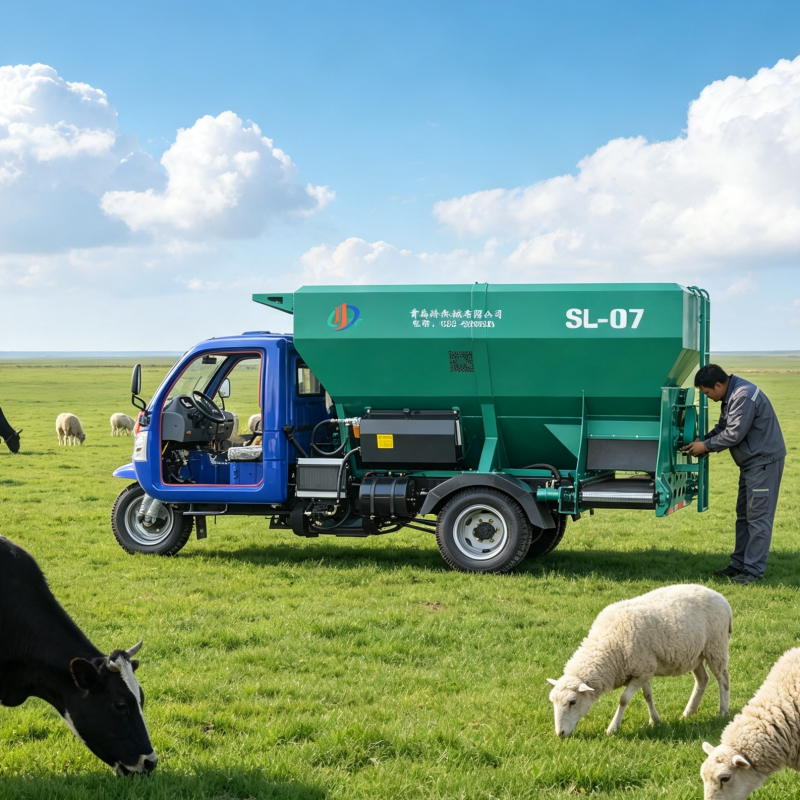
Purpose-built engineering eliminates these logistical bottlenecks. Upgrading a fleet with an Automatic Steel Livestock Feed Delivery Box provides a massive structural and operational advantage. These enclosed 7-meter units are constructed from heavy-duty steel to withstand the severe abrasive forces of raw grains. More importantly, integrating advanced auger systems and hydraulic discharge mechanisms allows for measured, high-speed unloading directly into storage silos. This entirely bypasses human contact. Such mechanical precision eradicates product waste, completely prevents spoilage, and drastically slashes the turnaround time required at every single delivery waypoint.
Recent market data reveals a massive global pivot toward supply chain resilience. Logistics directors are aggressively moving away from reactive purchasing toward data-driven fleet architecture. In the agricultural sector, the dominant trend is heavily skewed toward payload optimization and discharge automation. Severe labor shortages are forcing farms and feed mills to adopt equipment that requires fewer operators to move larger volumes. Consequently, the demand for self-unloading, enclosed bulk carriers is skyrocketing. Meanwhile, urban centers are aggressively pushing zero-emission mandates. This regulatory pressure splits the industry into two distinct developmental paths. We are seeing ultra-light electric mobility taking over city centers, while heavy-duty automated diesel and hybrid power remains the undisputed king of rural bulk transit.
The operational environment acts as the ultimate filter when fleet managers procure new assets. Machinery that performs flawlessly on paved highways often becomes a massive liability on rutted dirt tracks. A rigorous empirical evaluation of the delivery terrain is mandatory to optimize supply chain efficiency.
High-density urban zones demand extreme agility. Compact electric vans, cargo bicycles, and e-bikes dominate environments like London or Tokyo. These micro-mobility solutions effortlessly bypass severe traffic gridlock. With municipalities actively enforcing strict zero-emission zones, deploying these agile vehicles is a strict regulatory requirement rather than a simple preference.
Industrial agriculture presents a brutal set of geographical hurdles. The distances between delivery points are vast, and the cargo volume is exponentially heavier. Picture navigating a heavily rutted, muddy farm access road in the dead of winter. In these harsh settings, deploying a rugged Feed Delivery Box car is an absolute necessity. Large-scale agricultural transport requires high ground clearance, reinforced heavy-duty suspension systems, and massive payload capacities to conquer unpredictable topographies safely.
Procuring the optimal delivery unit requires a systematic analysis of technical variables. Fleet engineers must look past the upfront sticker price and rigorously evaluate the total lifecycle value of the asset. Here is the framework for practical vehicle selection.
Volumetric and Payload Efficiency: Matching the chassis limits to your average delivery volume is step one. Underutilizing a massive truck burns expensive fuel unnecessarily, while overloading a light commercial van guarantees premature drivetrain failure. Purpose-built bulk carriers utilize reinforced steel frames engineered specifically to handle dense loads without compromising safe braking distances.
Discharge Technology: Manual shoveling is an obsolete practice. Modern profitability relies on automated augers and hydraulic lifts capable of moving specific cubic meters per minute. The faster the truck empties, the sooner it returns to the depot for the next run.
Drivetrain Endurance: Heavy bulk requires immense low-end torque. While pure electric motors are making strides in urban settings, long-haul agricultural routes still rely heavily on advanced diesel or hybrid engines. These provide the necessary stamina without sacrificing payload capacity to excessively heavy battery packs.
| Operational Metric | Standard Flatbed / Dump Truck | 7m Automatic Steel Feed Delivery Box |
|---|---|---|
| Cargo Protection | Tarp-covered, highly susceptible to moisture and pests | Fully enclosed heavy-duty steel, 100% weatherproof |
| Discharge Method | Gravity dump or intensive manual labor | Hydraulic auger system, zero manual labor required |
| Contamination Risk | High risk of cross-contamination between loads | Virtually zero risk due to sealed compartments |
| Unloading Speed | Slow, requires manual sweeping and cleanup | High-speed, measured precision directly into silos |
Logistics is undergoing a profound technological renaissance. The shift from manual oversight to automated precision is undeniable across all sectors. Market analyses indicate logistics managers are prioritizing data-driven fleets to combat labor shortages and streamline inventory.
Urban areas are rapidly adopting self-driving delivery robots for last-mile parcel drops. Utilizing LiDAR and real-time GPS, these compact units navigate sidewalks safely, lowering cost-per-delivery for short routes.
Simultaneously, rural automation focuses on smart-monitoring features integrated directly into heavy transport hardware. Today's advanced bulk carriers utilize internal load cells, automated discharge controls, and IoT sensors. The operator monitors exact feed weights in real-time from the cab. This prevents dangerous silo overfilling and guarantees precise delivery quantities. Investing in an automated Livestock Feed Delivery Box drastically reduces human error and lowers long-term operational costs through continuous, fatigue-free operation.
Global logistical strategies vary wildly based on local infrastructure, economic development, and regulatory frameworks. Tracking these regional adaptations provides valuable insight into the future of fleet management.
North American markets are heavily bifurcated. Cities push aggressively for total fleet electrification subsidized by corporate sustainability goals. However, the vast agricultural heartland remains laser-focused on maximizing heavy-duty payload automation. Moving raw commodities across state lines demands immense mechanical endurance that current EV tech struggles to match.
Europe presents a vastly different challenge. Historic cities with winding medieval streets force urban fleets into ultra-compact micro-mobility solutions. Aggressive low-emission zone policies heavily penalize internal combustion engines, making pedal-assist cargo bikes highly lucrative.
In emerging markets across Asia, Africa, and South America, resilience outweighs delicate electronics. Bridging the gap between rural farms and growing urban hubs requires tough, unforgiving machinery. A mechanically robust Feed Delivery Box car thrives in these exact conditions. Easy field repairability and brute structural strength are valued far above complex autonomous systems when operating miles away from advanced service centers.
Protecting your capital investment requires rigorous engineering oversight. Heavy-duty units operating in highly abrasive environments degrade quickly without proper preventative care.
Establish strict intervals for checking hydraulic fluid pressures and greasing auger bearings. Inspecting pneumatic tubes for blockages prevents catastrophic system failures during high-speed unloading. Routine checks on structural steel welds, tire pressure, and brake pads keep the fleet moving safely and prevent minor wear from escalating into expensive downtime.
Combine physical wrenching with modern telematics. Tracking software provides real-time data on fuel consumption, route efficiency, and engine idling. Analyzing this data allows fleet managers to optimize dispatch schedules and extend the lifecycle of every vehicle in the yard.
Even with cutting-edge equipment, structural challenges constantly threaten supply chain efficiency. Identifying these bottlenecks allows operations to deploy robust countermeasures.
Urban congestion destroys delivery schedules and compromises temperature-sensitive cargo. While dynamic routing software helps mitigate delays using live traffic data, physical gridlock remains an ever-present operational risk.
The rural last-mile presents unique spatial hurdles. Navigating a massive transport unit through tight farm gates, under low-hanging branches, and across unpaved driveways requires serious driving skill. The vehicle chassis must remain highly maneuverable despite carrying a maximum payload.
Sustainability mandates add another layer of complexity. Governments are pressuring companies to transition to greener fleets. The current engineering frontier is achieving this transition without sacrificing raw operational torque. Phased integration of hybrid technologies offers a practical bridge for heavy-duty agricultural logistics, balancing environmental compliance with the brute force required for bulk transport.
Procuring transport assets is a highly specific science. Managing urban meal deliveries and hauling agricultural bulk are fundamentally different businesses requiring vastly different tools. By upgrading to reliable, automated, and structurally sound machinery, operations can drastically cut overhead, eliminate manual labor, and protect cargo integrity from the elements.
Ready to eliminate manual unloading and protect your bulk commodities from spoilage? Stop relying on inadequate transport methods. Upgrade your fleet's efficiency and profitability today. Explore the full range of specialized agricultural transport solutions and find the perfect automatic steel feed delivery systems at jmachinery.com to future-proof your logistics operation.
It is a specialized cargo system designed specifically to transport bulk animal feed and raw grains. It minimizes manual labor, prevents product contamination from weather or pests, and ensures precise feed distribution across agricultural sites using automated hydraulic or auger discharge mechanisms.
No. This machinery is engineered for heavy-duty bulk transport. Urban food delivery requires compact, agile vehicles like e-bikes or small electric vans to navigate tight streets, comply with emission zones, and handle small parcel drops efficiently.
Focus on payload capacity, discharge technology, and drivetrain endurance. Evaluate your specific delivery environment. Urban routes require low emissions and agility, while rural agricultural routes demand high ground clearance, structural durability, and automated unloading capabilities.
Automation accelerates operational speed and eliminates human error. Automated hydraulic unloading systems on bulk transport trucks allow operators to discharge tons of feed in minutes without manual shoveling. This drastically lowers labor costs and speeds up turnaround times.
Electric vehicles excel in short-range urban environments. However, heavy-duty applications like bulk feed transport still rely heavily on advanced diesel or hybrid systems. These traditional powertrains provide the immense torque and extended driving range necessary for remote agricultural logistics.
A hydraulic auger system moves feed through a completely enclosed, sealed tubular pathway directly from the truck's steel box into the farm's storage silo. Because the feed is never exposed to open air, rain, or the ground, the risk of moisture ingress, pest interaction, and cross-contamination is virtually eliminated.
With rigorous preventative maintenance, a high-quality automated steel feed carrier can operate efficiently for 10 to 15 years. Lifespan heavily depends on regular greasing of moving parts, hydraulic fluid maintenance, and prompt repair of any structural wear caused by the abrasive nature of bulk grains.


