


| Overall Dimensions: | |
|---|---|
| Height from tire to top of hopper: | |
| Hopper Dimensions: | |
| Capacity: | |
| Payload: | |
| Machine weight: | |
| Hopper Material & Thickness: | |
| Quantity: | |
This 11m³ hammer type side discharge manure spreader developed by Jointtech is a professional tractor-towed manure and organic fertilizer spreading machine for modern livestock farms and planting bases. It is specially built to solve the problem of manure disposal and resource recycling in large and medium-sized cattle, sheep and dairy farms, turning livestock dung, compost and other organic waste into high-quality farmland fertilizer efficiently.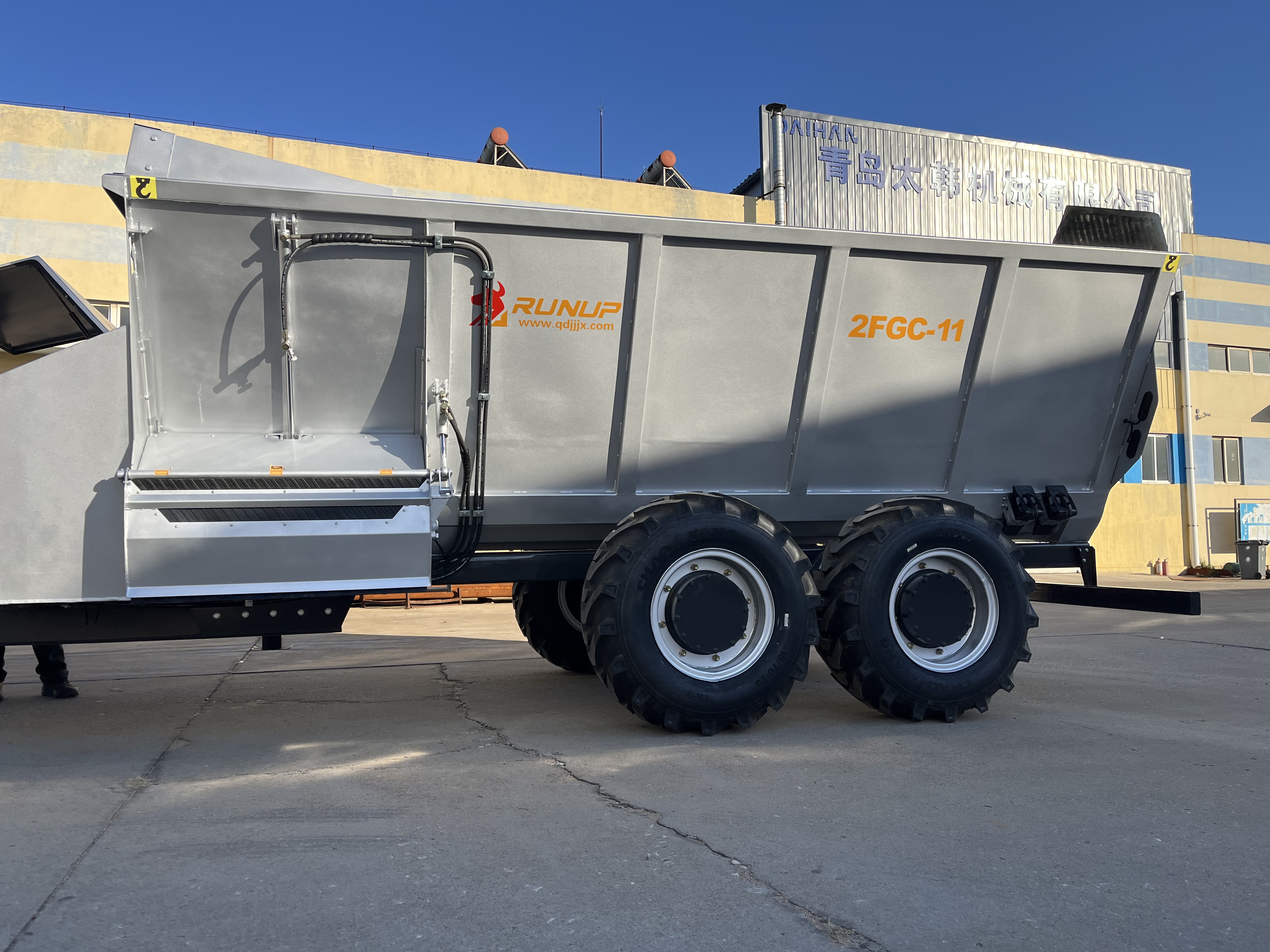
The machine adopts a sturdy Q355B steel frame, which features outstanding structural strength and impact resistance. The hopper is manufactured with thickened wear-resistant plates: the base plate is 5mm thick, side plates are 3mm thick, and front and rear plates adopt a double-layer 5+5mm composite structure. The auger blades are 6mm thick, which greatly improves the anti-corrosion and wear resistance, extending the service life even when continuously handling wet, sticky manure and rough compost materials.
The core spreading system consists of upper and lower augers plus 15 sets of hammer assemblies. The throwing shaft runs at 1200 RPM, the upper auger rotates at 30 RPM and the lower auger at 15 RPM. The coordinated rotation of augers and hammer groups crushes bulk caked manure evenly, then discharges materials from the side outlet. This design avoids material blockage and delivers consistent, uniform spreading across the field.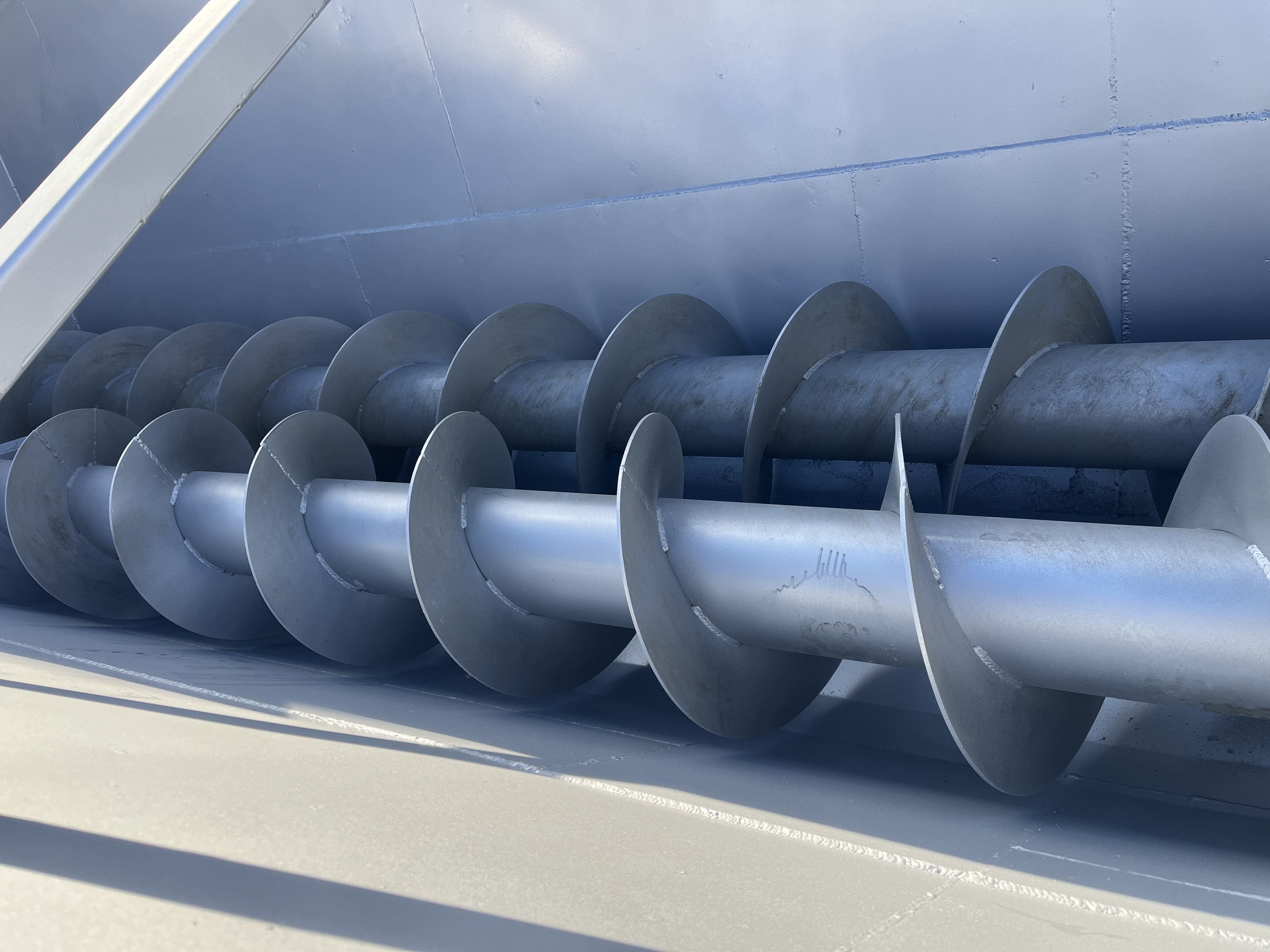
Equipped with dual fixed axles and four 16.70-20 large farm tires, the spreader has a payload of 12.8 tons. The wide-section tires provide excellent traction and anti-slip performance, adapting well to muddy, soft and uneven farmland after rain. The dual axle structure shares the load reasonably, effectively preventing rollover and deformation during heavy-load transportation and spreading.
Different from rear-discharge manure spreaders, this side discharge structure brings unique advantages. It can work along field ridges and farm borders conveniently, suitable for narrow plots and orchards. The transmission system is mature and reliable, easy to connect with standard tractors. Operators can control spreading speed and dosage flexibly according to crop demands.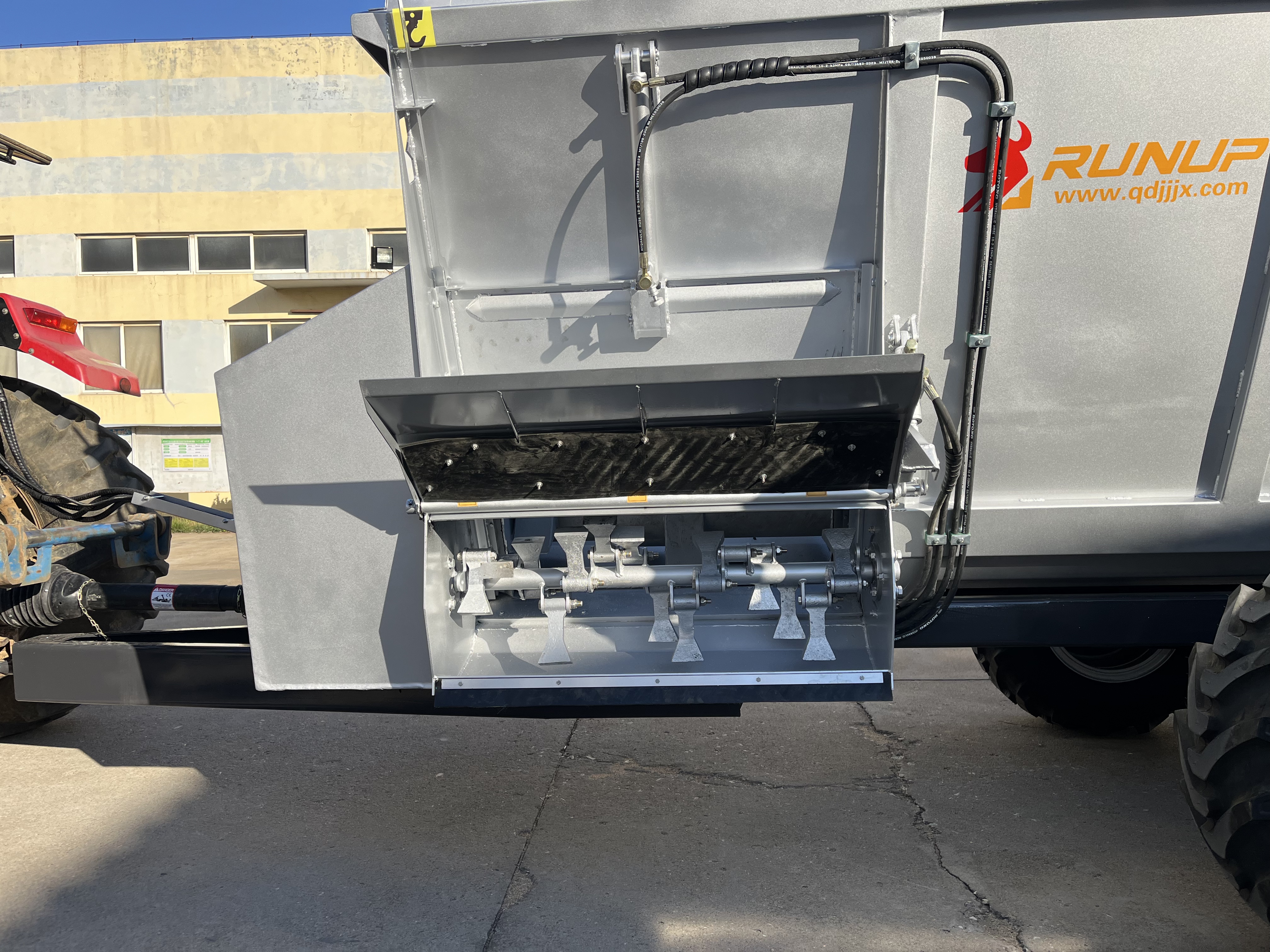
This manure spreader helps farms realize ecological circulation. It treats manure on site and returns organic matter to the soil, improving soil structure, increasing organic content and reducing the use of chemical fertilizers. It cuts labor cost greatly, replaces manual spreading and improves the sanitation level of the whole ranch. It is an essential environmental protection equipment for the sustainable development of modern agriculture.

